Healing Hands, Stolen Credit: The Black Physicians Who Built Modern Medicine From the Margins of Its Institutions

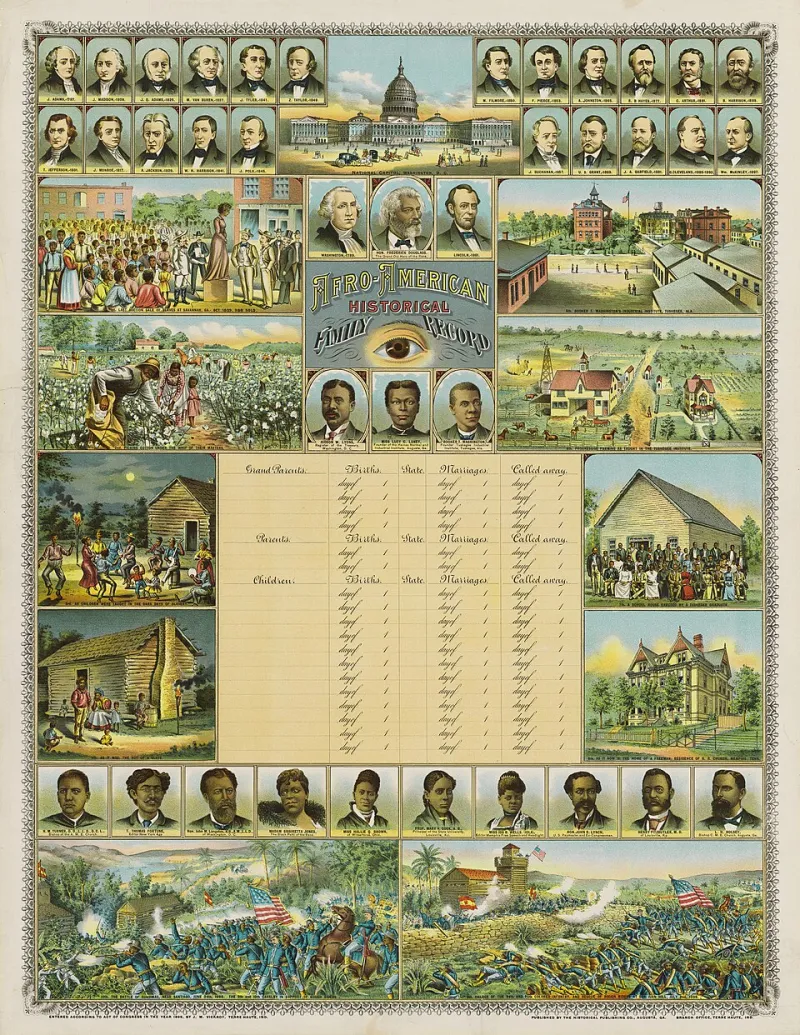
Photo: Nolabob, CC BY-SA 4.0, via Wikimedia Commons
A Profession Built on Exclusion
There is a particular cruelty embedded in the history of African American medicine: the same institutions that refused Black physicians entry as colleagues were quietly incorporating their methods into standard practice. The operating rooms that posted color bars at their doors were, in many cases, performing procedures first conceived in the segregated wards and underfunded clinics where Black doctors had no choice but to innovate. American medicine did not merely overlook its Black pioneers — it absorbed their contributions, stripped their names from the record, and then constructed a mythology of progress that rendered them invisible.
To understand this history fully is to reckon not only with racism as a social phenomenon but with racism as an epistemological act — a deliberate and sustained effort to determine whose knowledge counts, whose genius is legible, and whose labor may be claimed without acknowledgment.
Freedmen's Hospital and the Architecture of Black Medical Excellence
Founded in 1862 on the grounds of Howard University in Washington, D.C., Freedmen's Hospital became one of the most consequential medical institutions in American history — a fact that mainstream medical historiography has been slow to absorb. Established to serve the formerly enslaved and their descendants, the hospital operated under conditions of chronic underfunding and deliberate neglect by federal authorities. And yet, within those walls, a generation of Black physicians produced clinical work of extraordinary sophistication.
Daniel Hale Williams, who performed one of the world's first successful open-heart surgeries at Chicago's Provident Hospital in 1893, later served as chief surgeon at Freedmen's. His technique — suturing the pericardium of a stabbing victim who subsequently recovered — was documented in a medical journal, but the procedure's significance was minimized in the broader surgical literature for decades. Williams had trained at Chicago Medical College and founded Provident Hospital precisely because no existing Chicago institution would grant Black physicians staff privileges. His surgical innovations were thus born of a system that forced him to build his own theater before he could perform in it.
The broader significance of Freedmen's Hospital lies not only in the individual achievements of its surgeons but in its function as an institutional counterarchive — a site where Black medical knowledge was generated, transmitted, and preserved despite every structural effort to prevent it.
Pharmaceutical Knowledge and the Problem of Attribution
The erasure of Black medical innovation was not confined to surgery. In the realm of pharmacology and therapeutics, African American physicians and researchers made contributions that were routinely absorbed into mainstream practice without attribution. This pattern mirrored the broader dispossession of Black intellectual labor across American history — a process as old as the plantation economy, in which the knowledge of enslaved Africans about plant medicine, wound care, and disease management was extracted and repackaged by white practitioners.
Dr. Charles Drew's foundational work on blood plasma preservation and the organization of blood banks represents one of the most documented — and most painful — examples of this dynamic. Drew's research in the late 1930s and early 1940s established the scientific and logistical framework for modern blood banking. He directed the first large-scale blood bank program for the British military and subsequently led the American Red Cross Blood Bank. He was then removed from that directorship, at least in part because of pressure to enforce racial segregation in blood supplies — a policy that Drew publicly condemned as medically indefensible. The science was his; the institution used it while refusing him full standing within it.
The Surgical Technique That Forgot Its Author
Medical historians have begun to excavate a pattern that practicing clinicians rarely discuss: the frequency with which surgical techniques bearing the names of white physicians were, upon closer archival inspection, developed or substantially refined by Black colleagues who received no credit. The mechanisms of this erasure were varied. Some Black physicians published in journals with limited circulation within white academic medicine. Others had their contributions attributed to white supervisors or collaborators. Still others worked in institutional contexts — the segregated clinic, the Black hospital, the missionary dispensary — that the mainstream literature simply did not cite.
Dr. Vivien Thomas, a surgical technician at Johns Hopkins who never held a medical degree because segregation foreclosed that path, developed the surgical procedure for correcting Tetralogy of Fallot — a congenital heart defect — in collaboration with Dr. Alfred Blalock. The operation, performed in 1944 on a dying infant girl, is remembered in medical history as the "Blalock-Taussig shunt." Thomas's name was absent from that designation for decades. He trained the surgeons who replicated the procedure around the world. He stood at Blalock's elbow during the original operation, guiding his hands. His portrait did not hang in the Johns Hopkins hallway alongside those of the institution's other pioneering figures until 1994 — fifty years later.
Rebuilding the Archive
The work of recovering this history is not merely commemorative. It carries direct implications for how medical education is conducted, how clinical genealogies are traced, and how the profession understands the relationship between structural racism and scientific knowledge production. When Black physicians were excluded from hospitals, they built their own. When they were barred from professional societies, they founded the National Medical Association in 1895. When their publications were ignored by mainstream journals, they created the Journal of the National Medical Association. These were not consolation prizes — they were acts of intellectual self-determination that preserved a body of knowledge the dominant culture had every incentive to suppress.
The physicians of Freedmen's Hospital, Provident Hospital, Hubbard Hospital at Meharry Medical College, and dozens of other Black medical institutions did not merely survive exclusion. They generated a parallel tradition of clinical excellence that now stands as one of the most underexamined chapters in American intellectual history.
What Restitution Looks Like in a Medical Context
Acknowledging this history demands more than the retroactive addition of Black names to medical eponyms, though that would be a beginning. It requires a structural reassessment of how the profession narrates its own past — in textbooks, in residency training, in the stories told at grand rounds about where techniques come from and whose minds produced them. It requires medical schools to teach the history of segregated medicine not as a footnote to the civil rights movement but as a central chapter in the development of American clinical science.
It also requires honesty about the present. The same structural inequities that erased Black physicians from the historical record continue to shape who enters medicine, who advances within it, and whose research receives funding and publication. The archive of stolen credit is not closed. It is still being written.
The Ota Benga Archive holds that the reclamation of African and African American intellectual history is not a matter of sentiment — it is a matter of accuracy. Modern medicine stands on foundations it has not fully acknowledged. That acknowledgment begins with naming the hands that laid them.