Governing Before the Constitution: The African and African American Minds Whose Political Thought Built a Nation That Erased Them
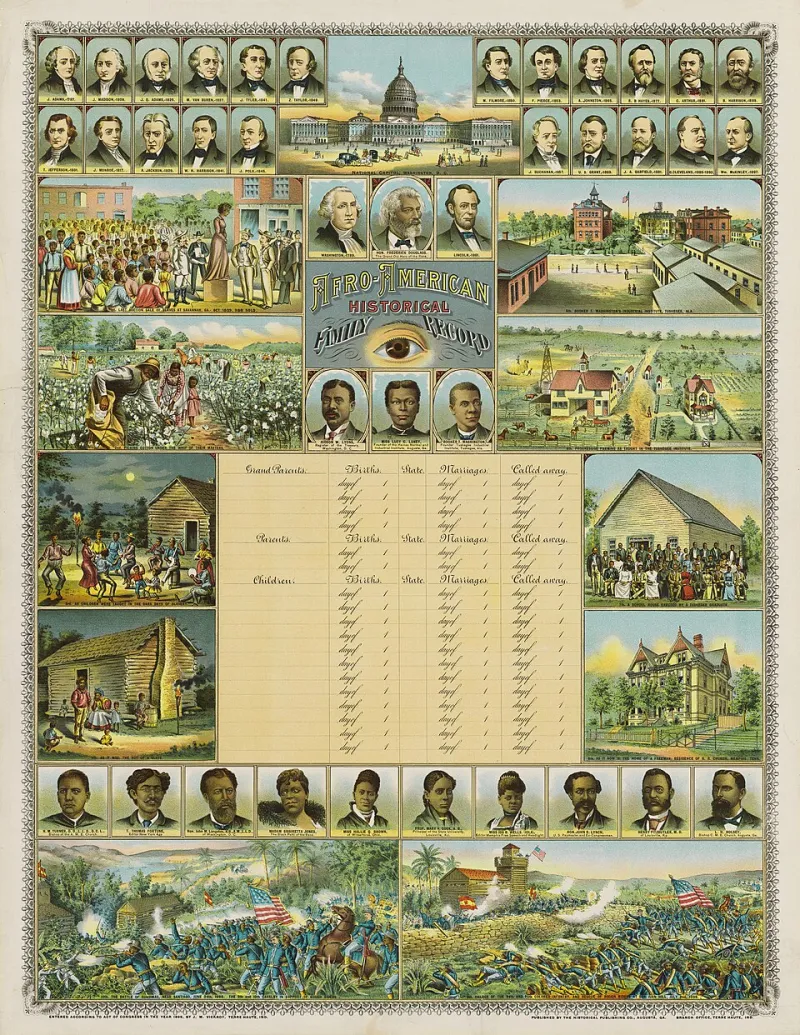
Photo: James M. Vickroy, Public domain, via Wikimedia Commons
The Founding Story We Were Given
American civics education has long maintained a tidy origin narrative: democracy was born in ancient Athens, refined through Rome, revived by Enlightenment thinkers in England and France, and then perfected by a group of landowning men in Philadelphia during the summer of 1787. It is a story with a clear protagonist — European rational thought — and a cast of supporting characters who are, almost without exception, white.
What this narrative omits is not merely a footnote. It is, in the assessment of a growing body of historians, anthropologists, and political philosophers, a structural erasure — one that has shaped not only how Americans understand their past, but how they measure the intellectual worth of entire peoples.
The African and African American thinkers who contributed to the philosophical foundations of American governance did not do so on the margins. They did so at the center, and the record, when examined honestly, makes that case with uncomfortable clarity.
African Political Philosophy Before Contact
To understand the intellectual inheritance at stake, one must begin not in 18th-century Philadelphia but in the governance traditions of pre-colonial Africa — systems whose sophistication has been systematically minimized in Western scholarship.
The Akan confederacies of present-day Ghana operated on principles of distributed authority that bear striking resemblance to federalist theory. Decision-making power was not concentrated in a single sovereign but dispersed across councils, lineage heads, and community assemblies. The concept of sunsum — roughly translated as the animating spirit of a collective — encoded the idea that political legitimacy derives from the governed, not from divine appointment or military conquest. This is not a loose analogy to consent-based governance. It is, as political theorist Kwasi Wiredu has argued in his foundational work on African political philosophy, a fully developed alternative to the European social contract tradition that arrived at similar conclusions through independent reasoning.
Further north, the Malian Empire under Mansa Musa's administration institutionalized a form of legal accountability for provincial governors that anticipated Montesquieu's separation of powers by several centuries. Governors were subject to review by both religious scholars and merchant councils — a tripartite check on authority that European theorists would not systematize until the 17th century.
The Haudenosaunee Confederacy — whose influence on the American founders has been acknowledged, however grudgingly, by mainstream historians — is often discussed in isolation from its broader context of Indigenous and African parallel traditions. Yet the principles it embodied: collective deliberation, restraint of executive power, and the protection of individual voice within communal decision-making, were not unique to the northeastern woodlands. They were part of a global philosophical conversation that European colonialism interrupted and then claimed to have originated.
Black Voices in the Room America Pretended Was Empty
By the time the Constitutional Convention convened, there were African American thinkers already articulating sophisticated political philosophies that engaged directly with questions of rights, sovereignty, and legitimate governance.
Phyllis Wheatley, often reduced to a footnote about her poetic accomplishments, wrote political correspondence in the 1770s that engaged the contradictions of liberty discourse with a precision that no founding father managed to sustain. Her 1774 letter to Reverend Samson Occom drew a direct philosophical line between the rhetoric of colonial freedom and the moral incoherence of slavery — an argument that was not merely rhetorical but deeply structural. If natural rights are inalienable, as Locke insisted and Jefferson paraphrased, then the entire architecture of American governance rested on a category error it could not survive scrutiny. Wheatley named this. Jefferson did not answer it. He simply proceeded.
Prince Hall, founder of the first African American Masonic lodge in 1784, articulated in his lodge addresses a theory of civic belonging and collective dignity that directly challenged the racial exclusions embedded in Enlightenment political thought. Hall's framework insisted that civic virtue — the foundation of republican governance — was not a racial inheritance but a practiced discipline available to all people. This was not a plea for inclusion. It was a philosophical argument about the internal logic of democracy itself, one that the dominant tradition chose to ignore rather than refute.
David Walker's 1829 Appeal to the Coloured Citizens of the World is perhaps the most unambiguous example of African American political philosophy operating at the level of constitutional theory. Walker did not merely protest slavery. He systematically dismantled the philosophical premises by which it was justified, citing Jefferson against Jefferson and arguing that a republic premised on the degradation of any portion of its people had forfeited its claim to legitimate authority. Scholars including Peter Hinks and Saidiya Hartman have traced the Appeal's influence on abolitionist legal theory, which in turn shaped the 13th and 14th Amendments. The intellectual genealogy runs directly from Walker to the constitutional transformation of the post-Civil War era — yet Walker appears in fewer than twelve percent of high school American history curricula, according to a 2019 survey by the Education Trust.
The Repurposing of African Political Thought
The question of direct influence — whether the founders consciously drew on African governance traditions — is distinct from, and in some ways less important than, the question of parallel development and convergent logic. When James Madison wrote in Federalist No. 51 about the necessity of structuring government so that ambition counteracts ambition, he was articulating a principle that Akan political architects had already institutionalized. The question is not whether Madison read Akan governance manuals. It is whether the Western tradition's monopoly on these ideas is intellectually defensible.
Historian Robin D.G. Kelley has argued persuasively that African diasporic thought during the 18th and 19th centuries constituted a distinct political tradition — one that engaged with, critiqued, and in significant ways surpassed the Enlightenment frameworks it was forced to respond to. The thinkers within this tradition were not derivative. They were generative. They were producing original political philosophy under conditions of extreme duress, and they were doing so with a rigor and internal consistency that the mainstream canon has never fairly assessed.
What the Archive Demands
The Ota Benga Archive exists, in part, to hold this reckoning open. The story of African and African American political thought is not a supplement to the American democratic tradition. In a meaningful sense, it is that tradition — or at least, it is the portion of that tradition honest enough to take its own premises seriously.
Recovering these intellectual lineages is not an act of sentiment. It is an act of historical accuracy. Democracy, as practiced and theorized across the African continent and the African diaspora, did not await European permission to exist. It developed, flourished, and was documented — in oral traditions, in written appeals, in lodge addresses, in constitutional petitions, and in the governance structures of civilizations that predate the Atlantic world by millennia.
The architects were never silent. We simply stopped listening.