Roots, Remedies, and Robbery: The African American Botanists Whose Discoveries Were Claimed by Others
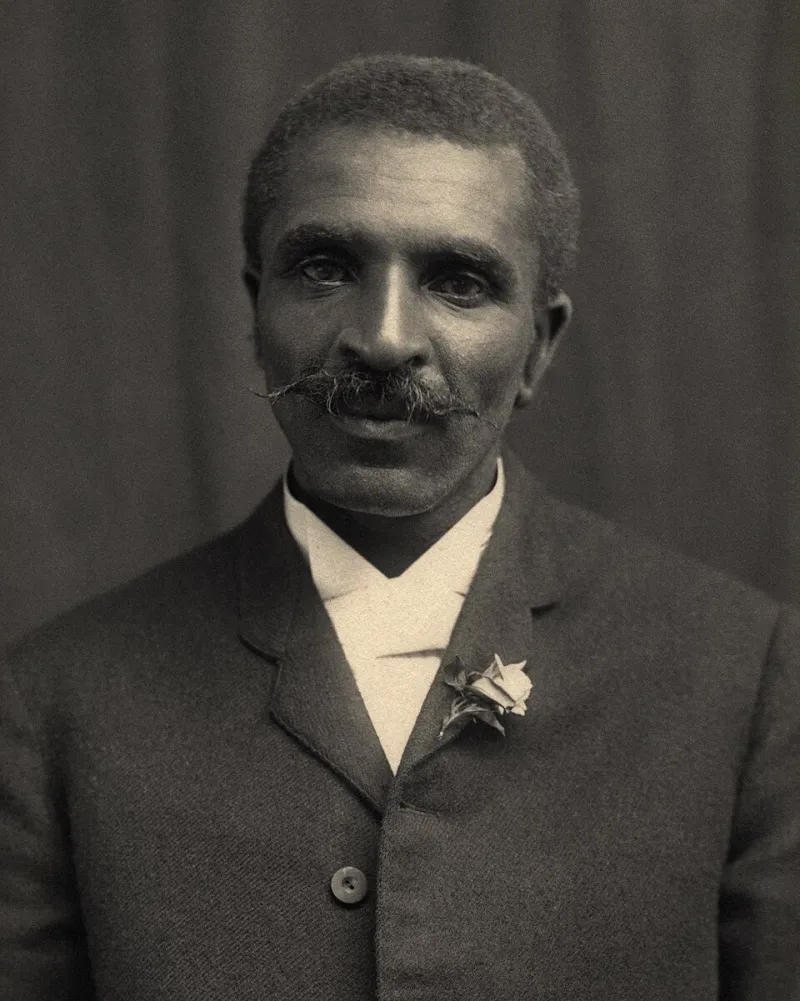
Photo: Adam Cuerden, Public domain, via Wikimedia Commons
The history of American botany is often told as a story of European curiosity meeting an untamed New World wilderness. Gentlemen naturalists with leather-bound journals, we are told, ventured into forests and swamps and returned with specimens that transformed medicine, agriculture, and science. What that story omits—deliberately and consistently—is the labor, knowledge, and intellectual contribution of the African American men and women who made those discoveries possible in the first place.
From the colonial era through the nineteenth century, enslaved and free Black botanists cultivated an intimate, working knowledge of North America's medicinal landscape. They gathered, classified, cultivated, and documented plants with a sophistication that rivaled anything produced in European academies. And when their work was absorbed into the scientific canon, their names were erased from the record.
The Plantation as Laboratory
It is no accident that so much early American botanical knowledge originated on plantations. Enslaved Africans arrived in the Americas carrying centuries of accumulated pharmacological tradition—knowledge of roots, barks, leaves, and seeds that had been refined across generations of West and Central African healers. That knowledge did not disappear at the water's edge. It adapted.
On Southern plantations, enslaved healers became the primary medical practitioners for entire communities, both Black and white. They identified native North American plants with properties analogous to those they had known in Africa, documented their effects through careful observation, and developed treatment protocols that were measurably effective. Plantation owners who publicly dismissed African healing traditions as superstition were, in private, relying on those same traditions to treat their families and their enslaved workforce.
This contradiction was not incidental. It was structural. The knowledge was extracted and used; the people who generated it were denied any claim to authorship.
Caesar's Cure and the Pattern of Appropriation
One of the earliest documented cases of this kind of appropriation involves a man known only as Caesar, an enslaved healer in colonial South Carolina whose antidotes for snakebite and poison were so effective that the South Carolina General Assembly purchased his freedom in 1750 and granted him a lifetime pension—after first publishing his remedies in the South Carolina Gazette without his full consent or lasting attribution. The remedies were subsequently reprinted in European medical journals, absorbed into the pharmacological literature, and cited as folk discoveries rather than the product of systematic, accumulated expertise.
Caesar's case is notable because it is documented. Countless others are not. The plantation records, the naturalists' correspondence, the institutional archives of organizations like the American Philosophical Society all contain traces of Black botanical knowledge that was laundered through white intermediaries before entering the scientific record.
The Collectors Behind the Collections
By the eighteenth and nineteenth centuries, the practice had become formalized. White naturalists—many of them funded by European botanical institutions, including the Royal Society and the Jardin des Plantes in Paris—employed or coerced Black collectors to gather specimens across territories that white scientists were either unable or unwilling to traverse themselves. These collectors did not merely gather plants. They identified them, described their properties, noted their local uses, and often pressed and prepared them for transport. The intellectual work was theirs.
When the specimens arrived in European institutions, however, they arrived under the names of the white naturalists who had commissioned the work. The collectors became invisible. Their local knowledge, which gave the collections much of their scientific value, was described in correspondence as "native information"—a phrase that simultaneously acknowledged the knowledge and denied it the status of science.
The botanist and explorer John Bartram, celebrated as the father of American botany, maintained extensive networks of plant collectors throughout the mid-Atlantic and Southern colonies, several of whom were enslaved. His correspondence reveals a man who understood the value of local knowledge while consistently framing it as raw material rather than intellectual contribution. The specimens Bartram sent to the Royal Society in London were catalogued under his name. The people who found them were not catalogued at all.
Enslaved Women and the Pharmacopoeia Nobody Credited
The erasure was gendered as well as racial. Enslaved women, who served as midwives, herbalists, and healers on plantations across the South, possessed highly specialized knowledge of plants affecting reproductive health, pain management, and fever reduction. Their expertise was extensive enough that white physicians in the antebellum South routinely consulted them—and then published the results of those consultations as their own clinical observations.
The work of Harriet Washington, particularly her landmark study Medical Apartheid, has helped document how the medical establishment extracted knowledge and biological material from Black Americans while systematically denying them the status of knowledge-producers. The botanical dimension of this history is equally significant. Remedies derived from plants that enslaved women had identified, tested, and refined over generations appeared in nineteenth-century pharmacopoeias with no trace of their origins.
The Institutional Architecture of Erasure
Understanding why this happened requires looking at the institutions that governed scientific credibility in the eighteenth and nineteenth centuries. Membership in scientific societies, publication in peer-reviewed journals, and access to the networks of patronage that funded research were all effectively closed to Black Americans. This was not a passive exclusion. It was actively maintained through legal barriers, social violence, and institutional policy.
The result was a system in which Black botanists could generate knowledge but could not own it. They could collect specimens but could not publish findings. They could develop treatments but could not claim discovery. Every mechanism for establishing scientific priority was controlled by people with a direct interest in denying that priority to Black contributors.
This architecture did not collapse after emancipation. It adapted. Well into the twentieth century, Black scientists working in botany, ecology, and ethnobotany found their work attributed to white colleagues, their institutional affiliations denied, their publications rejected. The specific mechanism of theft changed; the outcome did not.
What the Erasure Costs Us Now
The consequences of this history extend into the present. Contemporary pharmaceutical research increasingly recognizes the value of traditional ecological knowledge—the detailed, place-based understanding of plant properties that communities develop over generations. Ethnobotany has become a serious and well-funded field. And yet the communities whose ancestors generated the foundational knowledge that field now builds upon remain largely excluded from its benefits, its institutions, and its credit structures.
The biodiversity of the American Southeast, the pharmacological properties of dozens of plants now used in modern medicine, the ecological relationships that make certain plant communities thrive—all of this was mapped, in significant part, by Black botanists whose names we do not know. Recovering those names, where the archives permit, is one task. Changing the structures that made erasure possible is another.
The Ota Benga Archive holds that both tasks are necessary. History is not merely a record of what happened. It is the foundation on which claims about knowledge, credit, and belonging are built. To reclaim the history of Black botanical science is to insist that the ground beneath American medicine has always been more richly cultivated than its official story allows.