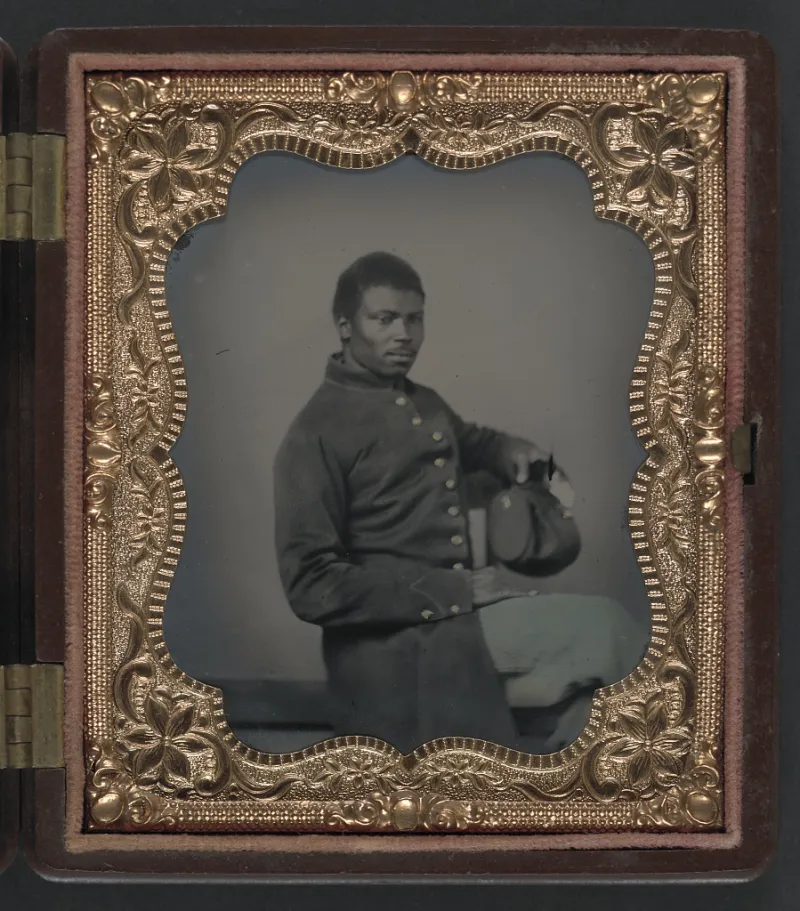
Broken Codes, Buried Names: The African American Cryptographers Whose Wartime Intelligence America Classified Into Oblivion
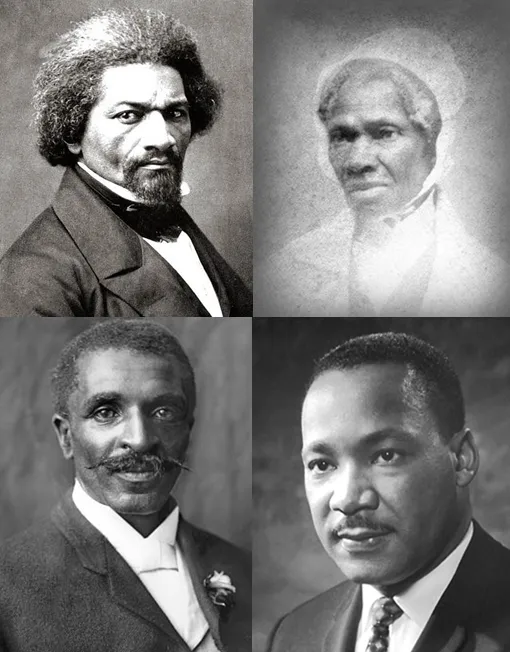
Photo: Not listed Library of Congress Nobel Foundation Library of Congress, Public domain, via Wikimedia Commons
There is a peculiar irony embedded in the history of American cryptography. The discipline that prizes concealment above all else—that treats invisibility as a tactical virtue—was itself perfected, in part, by people whom the nation had already rendered invisible. African American codebreakers, signals operatives, and mathematical thinkers contributed to American military intelligence across three foundational conflicts, yet their contributions were subjected to a second, more deliberate kind of encryption: the systematic erasure of their identities from the records that history would eventually consult.
To understand why this erasure matters, one must first understand what cryptography demanded of those who practiced it. Breaking an enemy cipher in the eighteenth or nineteenth century was not a mechanical task. It required pattern recognition of the highest order, an intuitive grasp of linguistic probability, and the capacity to hold multiple competing hypotheses in mind simultaneously while working under extreme time pressure. These were not skills that institutions of the era were willing to acknowledge in Black men and women—but they were skills those individuals possessed nonetheless, often developed through the very conditions of subjugation that were supposed to prevent their intellectual flourishing.
The Revolutionary War and the First Invisible Signals Corps
The Continental Army's intelligence apparatus was, by modern standards, rudimentary. George Washington's Culper Spy Ring has received considerable historical attention, but the network of enslaved and free Black informants who fed that ring critical intelligence has been treated as peripheral—a footnote rather than a foundation. What is less examined is how several of these operatives functioned not merely as couriers but as active interpreters of intercepted British communications.
Enslaved individuals who moved between British-occupied households and Patriot-held territories were uniquely positioned to observe, memorize, and transmit encoded messages. Some had acquired literacy in secret, a practice that carried violent consequences if discovered. Others had developed mnemonic systems of extraordinary complexity—oral encoding methods that allowed them to carry sensitive intelligence in their minds rather than on paper, rendering the information undetectable during searches.
One documented example involves James Armistead Lafayette, the enslaved Virginian who operated as a double agent inside Lord Cornwallis's headquarters. While his espionage work is occasionally acknowledged in popular histories, what receives almost no attention is the analytical dimension of his work: his ability to assess the reliability of intelligence, cross-reference troop movements against what he observed directly, and communicate calibrated assessments rather than raw data. This is the cognitive infrastructure of intelligence analysis. It was not named as such because naming it would have required acknowledging the mind performing it.
The War of 1812 and the Mathematics of Intercepted Dispatch
By the time the United States entered its second major conflict with Britain, the practice of intercepting and decoding enemy communications had become more formalized—though no less dependent on individual brilliance. Free Black sailors and dockworkers in port cities along the Eastern Seaboard occupied positions of acute strategic sensitivity. They handled cargo manifests, listened to officer conversations conducted in the casual assumption that Black workers were functionally deaf, and in several documented cases, transcribed or relayed coded British naval communications to American commanders.
The port of New Orleans presents a particularly instructive case. In the months leading up to the Battle of New Orleans in January 1815, Andrew Jackson's intelligence network relied heavily on the free Black population of the city, many of whom were multilingual—fluent in French, Spanish, English, and Haitian Creole—and therefore capable of parsing communications that monolingual Anglo-American officers could not. Jean-Baptiste Savary, the free Black officer who commanded a battalion of color under Jackson, is occasionally cited in military histories. The intelligence infrastructure his community maintained is not.
The decoding of British naval signal flags—a practice that required both visual acuity and a working knowledge of British naval communication conventions—was performed in part by Black maritime workers whose proximity to British vessels gave them observational access unavailable to white American operatives. Their decoded intelligence informed American defensive positioning in ways that shaped the battle's outcome. Their names did not make it into the after-action reports.
The Civil War's Shadow Signals Corps
The Civil War produced the most technically sophisticated intelligence operations in American history to that point, and African Americans were embedded in that apparatus at every level—as scouts, as couriers, as interrogators of Confederate prisoners, and as analysts of captured documents. The United States Colored Troops included men who had, in some cases, been trained in literacy and mathematics by abolitionist educators specifically because their intellectual capacity was understood to be a military asset.
Allan Pinkerton's intelligence service and, later, the Bureau of Military Information under Colonel George Sharpe both made use of Black informants whose contributions were documented internally but systematically omitted from public-facing reports. The reason was not simply racism of the casual variety—it was strategic racism, a calculated decision that crediting African American intelligence work would undermine the political case for Black inferiority that the postwar South required to reconstruct its social order.
One of the most striking examples involves the network of enslaved people in Richmond, Virginia, who fed intelligence to Union commanders through a chain of couriers that historians have only partially reconstructed. Mary Elizabeth Bowser, placed within the Confederate White House by Elizabeth Van Lew, has received some recent recognition. What remains underexamined is the broader analytical network she operated within—the individuals who received her intelligence, assessed its credibility, and integrated it with other sources to produce actionable military guidance. These were acts of cryptographic synthesis, performed without formal training, in conditions of mortal danger.
Why the Erasure Was Structural, Not Accidental
The removal of African American cryptographers from official military histories was not the product of individual prejudice alone. It was the outcome of institutional processes: the writing of after-action reports by officers who had professional incentives to claim credit for intelligence successes; the classification of records that, once declassified, had already shaped the secondary literature; and the deliberate construction of a national mythology in which military genius was racially coded as white.
This matters for contemporary Americans because the history of cryptography is not merely academic. The National Security Agency, the Defense Intelligence Agency, and the broader American signals intelligence community trace their institutional lineage through a narrative that begins with white mathematicians and ends with white mathematicians. That narrative is false. It is false in the way that most American institutional origin stories are false—by omission rather than fabrication, by the quiet decision to stop asking certain questions.
Reclaiming the Archive
The work of recovering these histories is ongoing and necessarily incomplete. Pension records, letters, oral histories collected by the Federal Writers' Project, and recently digitized military archives have begun to yield names and fragments of stories that reframe what American cryptographic history actually looks like. Scholars at Historically Black Colleges and Universities have led much of this recovery work, often without the institutional resources that flagship research universities command.
What these fragments collectively suggest is that African American intellectual labor was not incidental to American military success. It was load-bearing. The codes that were broken, the dispatches that were intercepted, the signals that were read and relayed—these outcomes were achieved in part by people whose names the nation chose not to record. Recovering those names is not a gesture of sentiment. It is an act of historical accuracy, and it is long overdue.