Dissected by Denial: The Black Anatomists Whose Hands Built Modern Medicine From the Shadows of Exclusion
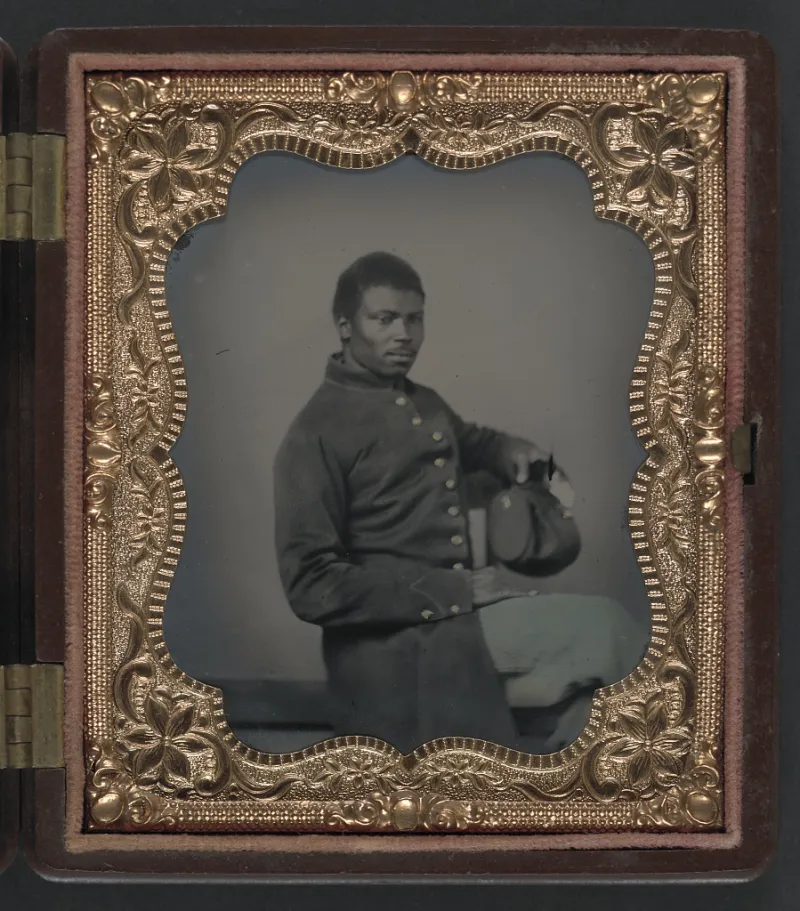
Photo: The Library of Congress, No restrictions, via Wikimedia Commons
There is a particular cruelty embedded in the history of American anatomy: the same bodies that medicine refused to recognize as fully human were the bodies it most aggressively studied, exploited, and dissected. Enslaved Black people were subjected to surgical experimentation without consent, their physiological responses observed and catalogued, their suffering transformed into data that white physicians then published under their own names. Yet within this same brutal system, a counter-tradition quietly emerged — one in which Black practitioners, working under extraordinary constraint, developed anatomical knowledge that would prove foundational to modern medicine. That they did so while being denied the most basic institutional recognition remains one of the most profound and underacknowledged injustices in the history of American science.
The Architecture of Exclusion
To understand what Black anatomists achieved, one must first understand the walls they were forced to scale. Throughout the antebellum period and well into the twentieth century, American medical schools operated as explicitly racialized institutions. The American Medical Association, founded in 1847, tacitly sanctioned the exclusion of Black physicians from membership in most of its constituent societies. Major institutions — Harvard Medical School, the University of Pennsylvania's medical department, Jefferson Medical College — either barred Black applicants outright or admitted them so rarely, and under such hostile conditions, that meaningful participation was rendered nearly impossible.
This was not merely a matter of professional gatekeeping. It was an epistemological project. By controlling who could dissect, who could publish, and who could be credited with discovery, the white medical establishment effectively controlled what counted as legitimate anatomical knowledge — and, by extension, who counted as a legitimate knower. Black practitioners who nonetheless acquired anatomical expertise did so in defiance of a system designed to prevent them from doing so at all.
Knowledge Cultivated in the Margins
The most extensively documented case of this dynamic involves the work done at institutions like the Freedmen's Hospital in Washington, D.C., and Meharry Medical College in Nashville, Tennessee — both founded in the aftermath of the Civil War specifically because mainstream institutions refused to train or employ Black physicians. Within these spaces, a generation of African American anatomists developed rigorous, methodologically sophisticated approaches to the study of human physiology.
Daniel Hale Williams, who performed one of the world's first successful open-heart surgeries in 1893 at Provident Hospital in Chicago, represents perhaps the most visible figure in this tradition. Yet Williams's achievement was not an isolated act of individual genius — it was the culmination of decades of anatomical study conducted within a network of Black medical institutions that had, out of necessity, developed their own intellectual infrastructure. The surgical techniques Williams employed drew on anatomical knowledge that had been refined through practice and observation by Black practitioners who had no access to the cadaver laboratories and dissection theaters that white physicians took for granted.
Less celebrated, but equally significant, were figures like physician and anatomist Rebecca Lee Crumpler, the first African American woman to earn a medical degree in the United States. Working in Richmond, Virginia, in the immediate aftermath of the Civil War, Crumpler provided care to formerly enslaved people and documented physiological observations that challenged prevailing assumptions about race-based biological difference — assumptions that white physicians were simultaneously using to justify the denial of medical care to Black communities.
The Cadaver Economy and Its Racial Logic
Any honest account of Black anatomical knowledge must also reckon with the grave robbery economy that undergirded nineteenth-century American medical education. Medical schools required cadavers for dissection, and legal sources were scarce. The result was a thriving, extralegal trade in stolen bodies — and Black cemeteries bore a disproportionate share of the burden. The bodies of enslaved people, of free Black citizens, of the recently deceased poor were exhumed by so-called "resurrectionists" and sold to anatomy departments that asked few questions.
This meant that the anatomical knowledge being developed in white medical institutions was, in a direct and material sense, built upon Black bodies. The irony is staggering: Black people were denied the right to study anatomy formally, while their physical remains were used to educate the white physicians who would then claim credit for anatomical discoveries. The cadaver economy was not incidental to American medical history — it was structural, and its racial logic was inseparable from the broader logic of a society that treated Black bodies as resources to be extracted rather than persons to be respected.
What Was Stolen, and How It Traveled
The erasure of Black anatomical contributions operated through several mechanisms. The most straightforward was attribution — when a Black practitioner made a discovery or developed a technique, the credit was frequently transferred to the white physician who supervised, observed, or simply happened to be present. This was not always a matter of deliberate fraud; it was often the automatic operation of a credentialing system that did not recognize Black practitioners as capable of original thought.
A second mechanism was institutional invisibility. The journals that mattered, the conferences that conferred prestige, the textbooks that shaped medical education — all were controlled by institutions that excluded Black physicians. A discovery made at Meharry or Freedmen's Hospital that was not published in a recognized white medical journal effectively did not exist within the formal record of scientific knowledge. The knowledge itself might travel — absorbed into surgical practice, passed through networks of Black practitioners, taught in the classrooms of historically Black medical schools — but without institutional ratification, it could not be claimed.
A third mechanism was the deliberate destruction or suppression of records. The archives of Black medical institutions were not treated with the same care as those of their white counterparts. What survived often did so through the private preservation efforts of families and communities, not through the systematic archival practices of the state.
Recovering the Record
Scholars working at the intersection of medical history, African American studies, and the history of science have spent the last several decades attempting to reconstruct what was lost. Figures like historian Todd Savitt, whose work on medicine and slavery in the antebellum South opened new lines of inquiry, and more recent scholars like Harriet Washington, whose 2006 book Medical Apartheid provided a comprehensive account of the exploitation of Black bodies in American medicine, have done essential work in making these histories visible.
But recovery is not the same as restoration. The names that were stripped from medical textbooks have not been restored to them. The anatomical discoveries that were attributed to white physicians have not been formally recredited. The institutional histories of American medical schools have not, for the most part, been rewritten to acknowledge the foundational contributions of the Black practitioners they excluded.
The Stakes of Acknowledgment
This history is not merely a matter of correcting the scholarly record, though it is certainly that. It carries direct implications for how contemporary medicine understands itself and its obligations. A medical establishment that cannot acknowledge the debt it owes to Black practitioners — and to the Black communities whose bodies were exploited to generate medical knowledge — is a medical establishment that has not fully reckoned with the conditions of its own formation.
The Black anatomists who mapped the human body under conditions of systematic exclusion did not do so in spite of their circumstances alone. They did so because of a commitment to knowledge and to community that the institutions around them refused to honor. That commitment deserves more than belated acknowledgment. It deserves to be named, taught, and placed at the center of the story American medicine tells about itself.