Argued in Shadows, Decided in Their Absence: The Black Legal Architects America's Courts Refused to Recognize
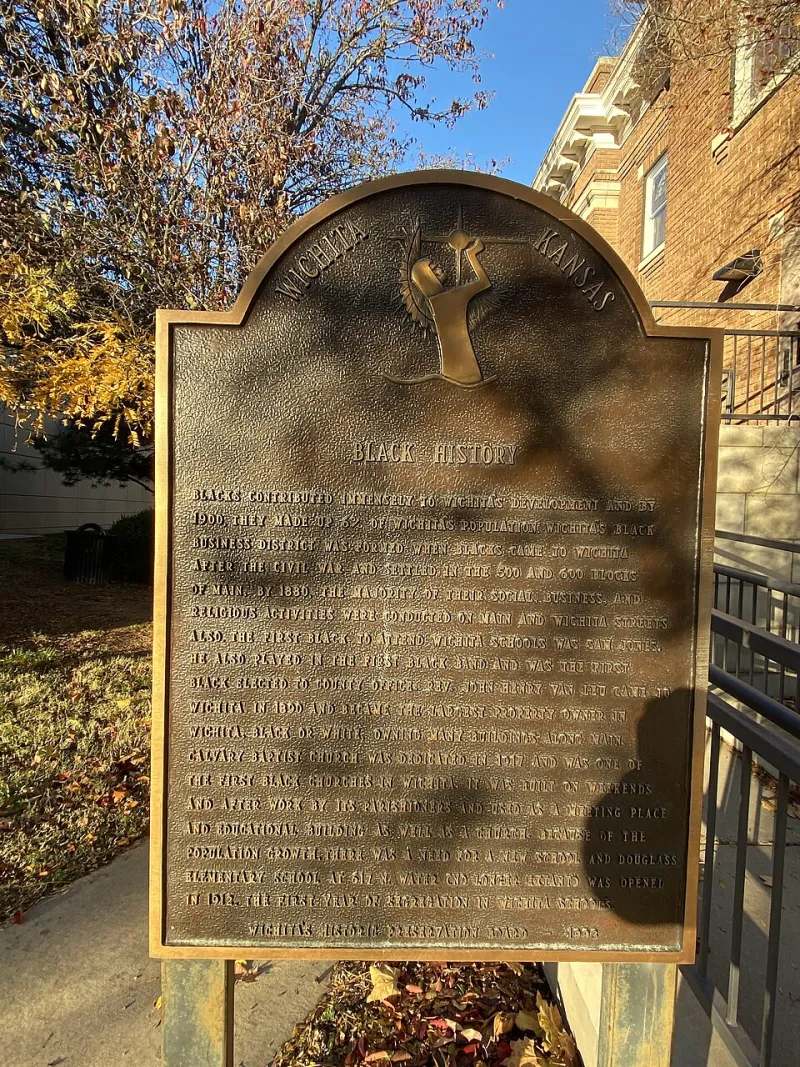
Photo: Myotus, CC BY 4.0, via Wikimedia Commons
There is a peculiar violence embedded in the architecture of American law. It is not only the violence of exclusion—though that exclusion was absolute, enforced by statute, custom, and physical intimidation for much of this nation's history—but the deeper violence of appropriation. The legal arguments that dismantled segregation, that reinterpreted the Fourteenth Amendment, that forced the courts to reckon with the contradiction between constitutional promise and lived reality: many of these ideas gestated in the minds of people who were legally prohibited from speaking them aloud in a courtroom.
The Ota Benga Archive exists precisely to name what has been unnamed. And in the domain of American legal history, the unnamed are legion.
The Paradox of Legal Exclusion
For most of the nineteenth century and well into the twentieth, Black Americans who sought formal entry into the legal profession encountered a wall that was simultaneously ideological and institutional. State bars denied admission on racial grounds. Law schools—including the most prestigious—refused Black applicants outright. Even after Reconstruction briefly opened narrow pathways, the post-Reconstruction backlash systematically closed them again, dismantling the fragile professional infrastructure that had begun to form.
And yet the law did not stop being studied. It did not stop being interpreted. It did not stop being argued.
In church basements and the back rooms of fraternal organizations, in letters exchanged between ministers and mutual aid societies, in the pamphlets of abolitionist intellectuals and the petitions drafted by free Black communities in Northern cities, a sophisticated and sustained engagement with constitutional law was underway. It operated without institutional sanction. It produced no bar cards and generated no billable hours. But it produced ideas—ideas that would eventually find their way into the formal legal record, often through white intermediaries who presented them as their own.
Ghostwriting the Constitution's Second Life
The practice of Black legal intellectuals drafting arguments that were then submitted under white attorneys' names was neither incidental nor rare. It was, in many documented cases, a structural feature of antebellum and early postbellum legal practice.
Free Black men with deep literacy in constitutional theory—men who had studied Blackstone, who had read the Federalist Papers with the critical eye of those for whom the stakes of interpretation were existential—regularly collaborated with white lawyers on cases involving slavery, property rights, and personal liberty. The collaboration was almost never credited. The white attorney appeared in the record; the Black intellectual did not.
This pattern extended into the courtroom itself. There are documented instances of enslaved men who possessed detailed knowledge of contract and property law—knowledge acquired through proximity to their enslavers' legal affairs—who provided the substantive legal reasoning that their enslavers then presented in litigation. The enslaved person's legal mind was, in effect, being rented out alongside his labor. The product of that mind became the property of the man who claimed to own him.
The Jurisprudence of Survival
What makes this history philosophically remarkable is not merely that Black legal thinkers were excluded from formal recognition—though that injustice demands acknowledgment—but that the conditions of their exclusion shaped the quality and character of their legal reasoning in distinctive ways.
To interpret the Constitution as a Black person in nineteenth-century America was to engage it as both a text and a weapon. It was to read the equal protection clause knowing that its authors had not intended it to protect you, and to argue nonetheless that its language demanded more than its authors had imagined. This was not naive idealism. It was a form of jurisprudential judo—using the internal logic of the document against the intentions of its framers.
This interpretive tradition, which legal scholars now sometimes call the Black constitutional tradition, was not invented by Thurgood Marshall or Charles Hamilton Houston, though both men refined and deployed it with extraordinary skill. It was developed across generations by thinkers whose names the formal record largely does not preserve: the anonymous petitioners who argued before state legislatures that the natural rights language of the Declaration created enforceable legal obligations; the freedom suit litigants who developed novel theories of standing and personhood; the church-based legal aid networks that constructed early frameworks for what we would now call civil rights litigation.
The Howard Pipeline and Its Forgotten Tributaries
The founding of Howard University School of Law in 1869 is often treated as the origin point of Black legal education in America. In one institutional sense, it was. But this framing obscures the decades of informal legal education that preceded it and that made Howard's early graduates possible.
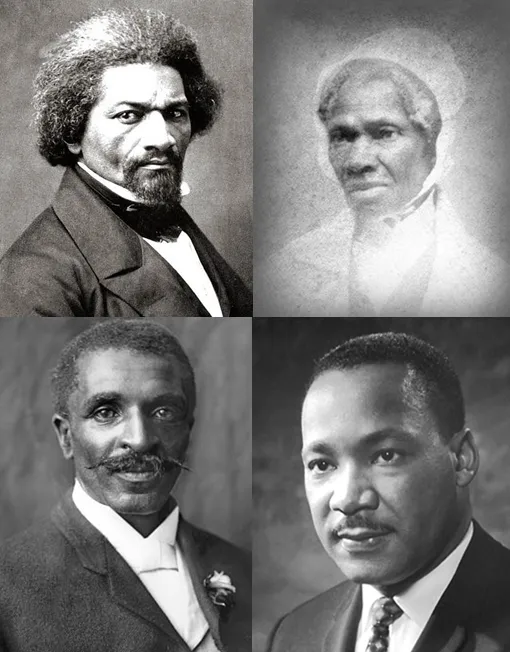
The men and women who enrolled in Howard's law program in its first decades did not arrive intellectually empty. They arrived carrying traditions of legal reasoning that had been cultivated outside any institution—in the arguments of Frederick Douglass, whose constitutional interpretations were sophisticated enough to shift abolitionist legal strategy; in the writings of Maria Stewart, who grounded her claims to civic participation in natural law theory; in the freedom petitions of Black New England communities that anticipated, by nearly a century, the equal protection arguments that would eventually prevail in federal court.
Howard gave those traditions a building and a curriculum. It did not invent them.
What the Record Erases, the Archive Restores
The formal legal record is, by design, a record of authorized speakers. It preserves the names of those the system recognized as legitimate participants and systematically omits those it refused to recognize. This means that recovering the history of Black legal thought requires reading against the grain of the archive—looking for the intellectual fingerprints of minds the record declined to name.
Those fingerprints are there. They appear in the unusual sophistication of arguments submitted by white attorneys with no documented background in constitutional theory. They appear in the legal reasoning embedded in abolitionist pamphlets and freedom petitions. They appear in the oral arguments that Black observers reported hearing in courtrooms where they were permitted to sit only in segregated galleries, arguments that bore little resemblance to the written briefs filed by the attorneys of record.
They appear, most legibly, in the ideas themselves—ideas whose intellectual genealogy, when traced honestly, leads back not to the law schools that refused to admit Black students, but to the communities those students came from.
A Reckoning the Profession Has Not Yet Completed
American legal history has begun, slowly, to reckon with this inheritance. The recovery of figures like John Mercer Langston, the first Black person admitted to practice law in Ohio, or Macon Bolling Allen, who became the first Black lawyer formally admitted to the bar in the United States in 1844, represents genuine progress. But individual recovery is insufficient when the deeper pattern—the systematic extraction of Black legal intelligence without attribution—remains underexamined.
The constitutional law taught in American law schools today rests, in part, on a foundation built by people the institution refused to admit. That is not a metaphor. It is a historical claim that the evidence supports and that the profession has a scholarly obligation to investigate with the same rigor it applies to any other question of legal provenance.
At the Ota Benga Archive, we hold that recovering these histories is not a gesture of sentiment. It is an act of intellectual honesty—a recognition that the story of American law cannot be told accurately without naming the minds it chose to render invisible.