Self-Made and Systematically Unmade: The Black Economic Ecosystems America Built, Destroyed, and Refuses to Remember
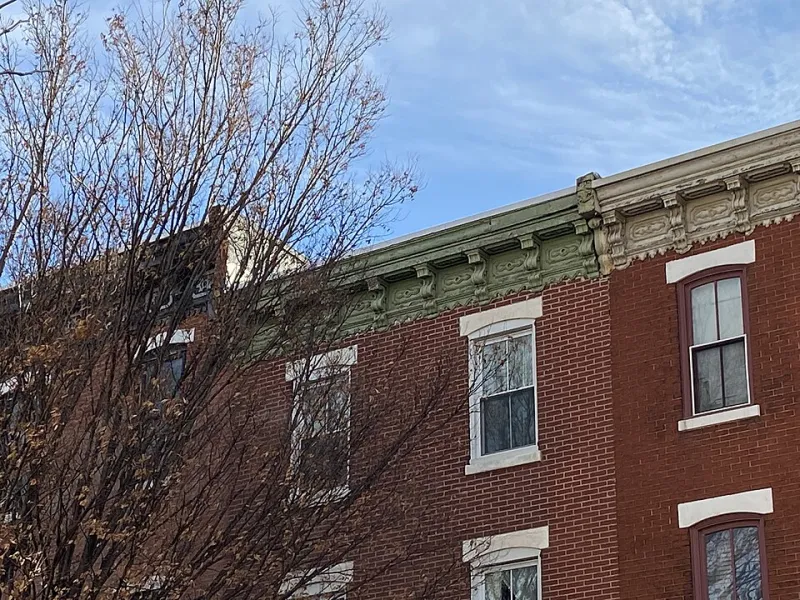
Photo: Nolabob, CC BY-SA 4.0, via Wikimedia Commons
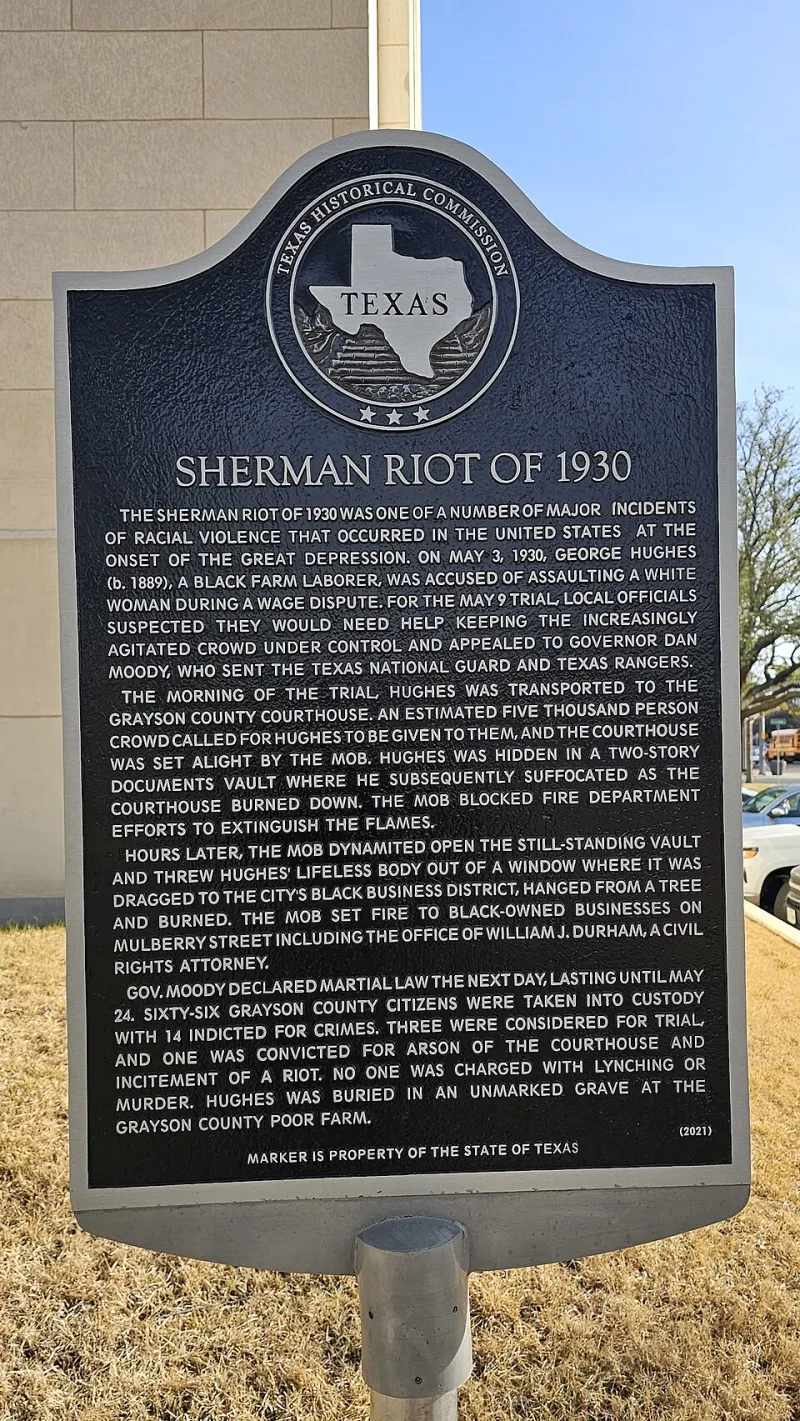
The phrase "Black Wall Street" has entered the popular lexicon in recent years, largely through renewed attention to the 1921 Tulsa Race Massacre, in which a prosperous Black neighborhood was bombed, burned, and looted by a white mob while local law enforcement stood aside or actively participated. The horror of that event is real, and its recognition is long overdue. But there is a risk embedded in the way the story is typically told: by framing Greenwood as exceptional—as a singular miracle of Black achievement—we inadvertently obscure the fact that it was not exceptional at all.
Greenwood was one node in a national network of Black economic communities that flourished across the United States in the late nineteenth and early twentieth centuries. These communities were built not by accident but by design—by people who understood, with painful clarity, that the American marketplace would not welcome them as equals, and who responded by constructing parallel economies of remarkable sophistication. To treat these communities as curiosities or anomalies is to misread the historical record entirely.
The Architecture of Exclusion—and the Economics It Produced
To understand Black economic communities in early twentieth-century America, one must first understand the structural conditions that shaped them. Jim Crow segregation did not merely humiliate—it redirected. When Black consumers were barred from white-owned hotels, department stores, insurance companies, and banks, their dollars stayed within Black communities by necessity. What began as compulsion became, in many cases, a form of economic coherence.
Black business owners in this era operated within a captive market, but they did not exploit it passively. They organized. They built institutions. They developed financial products tailored to communities that white banks refused to serve. They created professional associations, newspapers, and fraternal networks that circulated capital and information simultaneously. The architecture of exclusion, paradoxically, produced an architecture of self-sufficiency.
This is not a romantic reading of segregation. Segregation was a system of terror and deprivation, and nothing that follows should be understood as an argument for its benefits. What it produced, economically, was the result of extraordinary human ingenuity operating under conditions of profound injustice—not because of those conditions, but in spite of them.
Durham's Hayti: The Capital of the Black Middle Class
In Durham, North Carolina, the neighborhood of Hayti became, by the early twentieth century, one of the most economically dynamic Black communities in the United States. At its center stood North Carolina Mutual Life Insurance Company, founded in 1898 by John Merrick, Aaron McDuffie Moore, and several partners. By the 1920s, North Carolina Mutual had become the largest Black-owned business in America, earning Durham the designation "the capital of the Black middle class" from sociologist E. Franklin Frazier.
North Carolina Mutual was not simply a commercial enterprise. It was a civic institution. The company funded hospitals, schools, and philanthropic initiatives. It trained a generation of Black actuaries, accountants, and executives who would go on to lead institutions across the country. It demonstrated, in balance sheet terms, that Black Americans were creditworthy, capable of managing complex financial instruments, and entirely prepared to participate in the formal economy—if that economy would have them.
Around North Carolina Mutual grew a constellation of supporting enterprises: the Mechanics and Farmers Bank, founded in 1908 and still operating today as one of the oldest Black-owned banks in the nation; Black-owned law firms, pharmacies, and real estate agencies; a professional class that was educated, organized, and economically interconnected. Hayti was not a neighborhood. It was a system.
Chicago's Bronzeville: The Cultural and Commercial Capital of the Great Migration
As hundreds of thousands of Black Southerners moved northward during the Great Migration, Chicago's South Side neighborhood of Bronzeville emerged as perhaps the most culturally and economically complex Black urban community in American history. By the 1930s and 1940s, Bronzeville's main commercial corridor—South Parkway and 47th Street—was lined with Black-owned businesses serving a population that had created its own newspaper (the Chicago Defender), its own theatrical scene, its own insurance and banking infrastructure, and its own distinct consumer culture.
The Chicago Defender itself was an economic engine, not merely a journalistic one. It employed printers, advertisers, delivery workers, and salespeople. Its editorial decisions shaped consumer behavior, promoted Black-owned businesses, and circulated economic information across a national readership. The newspaper was both a product of Bronzeville's economic ecosystem and a mechanism for sustaining it.
Mutual aid societies and fraternal organizations also played a structural role that is often underappreciated in standard economic histories. Organizations like the Order of the Eastern Star and various church-based benevolent societies provided unemployment relief, burial insurance, and small-business loans to members who had no access to formal credit markets. These were not charitable gestures—they were sophisticated financial instruments, collectively managed, that allowed capital to circulate within the community rather than draining outward.
What Destroyed These Communities—and How
The decline of Black economic ecosystems in mid-twentieth-century America was not primarily the result of market forces or cultural shifts. It was, in large measure, the product of policy decisions made at the federal, state, and municipal levels—decisions that were racially targeted in their design and racially devastating in their effects.
Urban renewal programs, implemented across American cities in the 1950s and 1960s under the banner of modernization, displaced hundreds of thousands of Black residents and demolished thriving commercial districts. Durham's Hayti was bisected by the construction of a freeway. Chicago's Bronzeville was hollowed out by the concentration of public housing projects that isolated residents from economic networks. These were not accidents. They were choices.
Simultaneously, the desegregation of public accommodations—a genuine civil rights victory—had an unintended economic consequence: Black consumers gained access to white-owned businesses, and many redirected their spending accordingly. The captive market that had sustained Black economic ecosystems was no longer captive. Without the structural exclusion that had forced economic solidarity, and without policy support to maintain Black institutions, the ecosystems that had taken decades to build began to erode.
The Living Inheritance: What These Models Offer Today
The history of Black economic ecosystems is not merely a story of what was lost. It is a repository of proven strategies—mutual aid, community banking, deliberate circulation of capital within a defined economic community—that are directly applicable to contemporary wealth-building efforts.
Movements like "Buy Black" campaigns, community development financial institutions (CDFIs), and cooperative business models draw, whether explicitly or not, on the logic that animated Hayti and Bronzeville. The question is whether these efforts can achieve systemic scale in the absence of the structural conditions—however unjust those conditions were—that originally concentrated economic activity within Black communities.
The answer likely requires something more than nostalgia for a past that was, in many ways, built on suffering. It requires honest reckoning with what made those ecosystems work—institutional density, deliberate reinvestment, collective financial discipline—and what policy frameworks might recreate those conditions voluntarily rather than through compulsion.
The people who built North Carolina Mutual, who published the Chicago Defender, who managed fraternal benefit societies in church basements across the South—they were not waiting for permission. They were constructing, within the constraints available to them, the infrastructure of economic dignity. That inheritance is ours to reclaim, if we are willing to study it with the seriousness it deserves.