Foundations They Were Never Given Credit For: Enslaved and Free Black Builders Who Shaped American Infrastructure
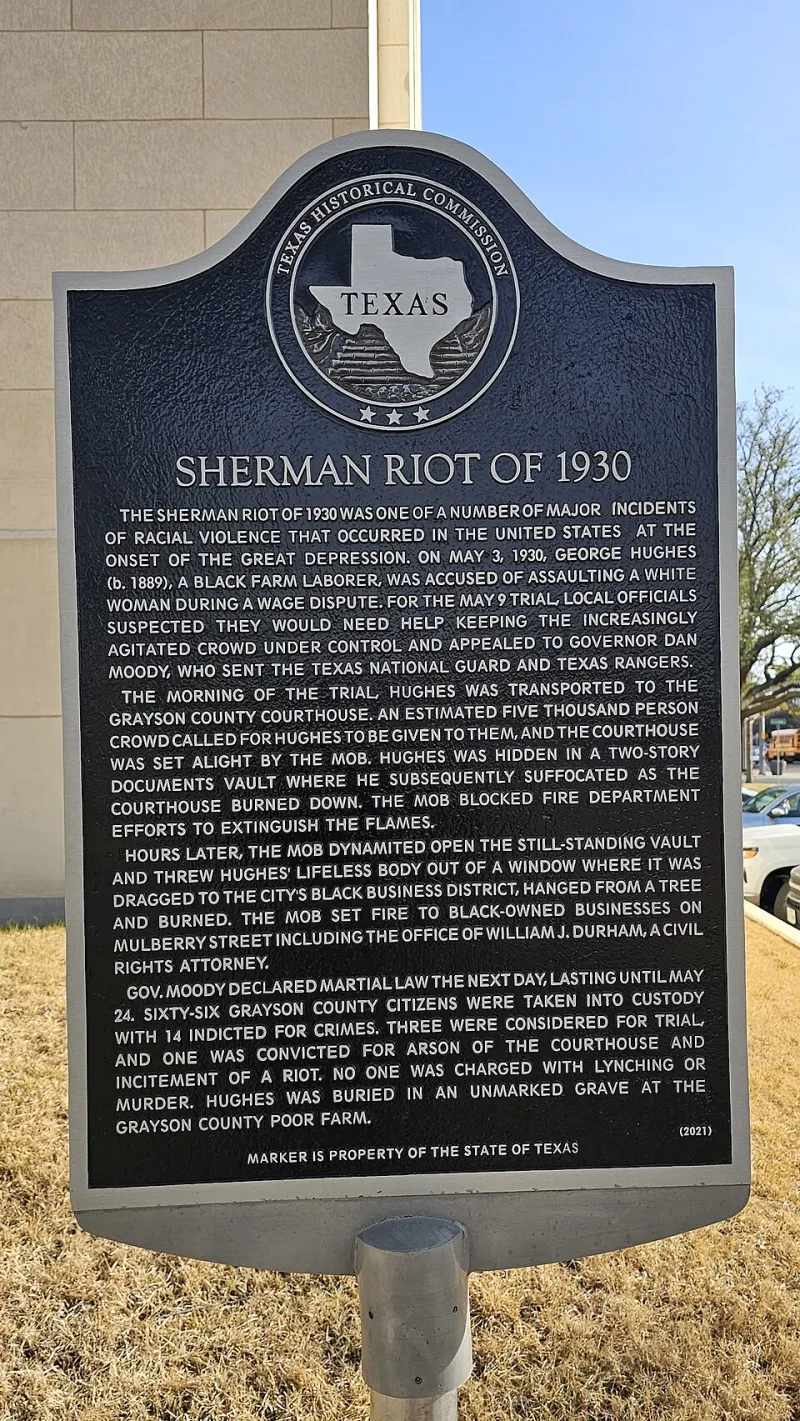
Photo: HominyGrits007, CC0, via Wikimedia Commons
When Americans cross a canal lock in Virginia, ride a train through the Cumberland Gap, or walk streets laid down in antebellum Charleston, they are moving through spaces built in significant part by African and African American hands — hands that history has rendered invisible. The omission is not a passive accident of incomplete record-keeping. It is, as scholars of Black labor history have increasingly demonstrated, the product of active suppression: a systematic effort to align the narrative of American industrial progress with the mythology of white invention and enterprise.
This article traces the contributions of enslaved and free Black engineers, bridge builders, canal workers, and urban planners across two centuries of American development, drawing on primary sources, archaeological findings, and biographical records that mainstream historiography has long neglected.
The Canal Era and the Invisible Labor Force
The early nineteenth century witnessed one of the most ambitious infrastructure campaigns in the young nation's history. The construction of the Erie Canal, completed in 1825, is often celebrated as a triumph of American engineering ingenuity. Less examined is the parallel network of canals built across the American South — the James River and Kanawha Canal in Virginia, the Louisville and Portland Canal in Kentucky, the Dismal Swamp Canal straddling Virginia and North Carolina — where enslaved Black workers performed not merely the grunt labor of digging but also the highly skilled work of surveying, leveling, and structural problem-solving.
Historian Bernard Edward Powers Jr. and others have documented how enslaved men with demonstrated aptitude in carpentry, masonry, and hydraulic management were hired out by their enslavers to canal companies at premium rates. These men — their names sometimes recorded in hiring ledgers as "Negro Jim" or "Pompey, carpenter" — possessed technical knowledge that foremen and overseers frequently lacked. In several documented instances, enslaved engineers corrected structural errors in canal lock design, preventing catastrophic failures. The credit, invariably, went to the white project supervisors.
Archaeological excavations along the Dismal Swamp Canal corridor, conducted in recent decades, have uncovered tool caches and construction debris consistent with skilled ironworking and timber framing techniques that trace directly to West and Central African building traditions — traditions that enslaved workers carried with them across the Atlantic and adapted to American materials and conditions.
Railroad Men Without Records
By the mid-nineteenth century, the railroad had become the defining symbol of American modernity. The construction of the Southern railroad network — including the South Carolina Railroad, the first American line to use a steam locomotive in regular service — depended overwhelmingly on enslaved Black labor. But beyond raw physical labor, there existed a class of Black railroad workers whose contributions were technical and supervisory in nature.
Railroad historian Aaron Marrs has noted that enslaved men were routinely employed as engineers operating locomotives on Southern lines, particularly on shorter industrial routes. Their mechanical proficiency was not incidental; it was cultivated, recognized, and exploited by railroad companies who found it cheaper to train enslaved workers than to import skilled white mechanics from the North. When emancipation came, many of these men attempted to formalize their expertise within the emerging trade union structure — and were systematically excluded by white labor organizations including, most notoriously, the Brotherhood of Locomotive Engineers.
Among the free Black community in the antebellum North, figures like Lewis Howard Latimer — whose contributions to electrical infrastructure in the 1880s are now receiving belated recognition — represent a documented tradition of Black technical innovation that flourished despite, not because of, the institutions surrounding it. Latimer drafted the patent drawings for Alexander Graham Bell's telephone and later improved Thomas Edison's incandescent lamp with a longer-lasting carbon filament. He received no patent credit for the latter work for decades.
Urban Landscapes and the Architects Behind Them
The built environment of American cities carries African American fingerprints that urban historians are only beginning to map systematically. In Washington, D.C., Benjamin Banneker's role in surveying the capital's original boundaries — after Pierre Charles L'Enfant's dismissal left the project in disarray — is perhaps the most cited example of Black intellectual contribution to American civic infrastructure. Yet even Banneker's story has been contested and minimized, his surveying role occasionally reduced to that of a mere assistant rather than the lead technical authority the historical record supports.
Less celebrated but equally significant are the contributions of enslaved craftsmen to the construction of the U.S. Capitol itself. The Architect of the Capitol's office has formally acknowledged, since 2012, that enslaved laborers quarried the sandstone, hauled timber, and performed skilled masonry work on the building that would house the legislature of a nation theoretically founded on liberty. Payroll records from the period list payments made not to the workers themselves but to their enslavers — a bookkeeping practice that simultaneously monetized Black skill and erased Black identity from the historical ledger.
During the Reconstruction era and into the Jim Crow period, Black architects trained at institutions like Howard University's architecture program — established in 1919 — designed schools, churches, and civic buildings across the South that served as anchors of community life. Their work, largely confined to Black neighborhoods by segregation, rarely entered the mainstream architectural canon. Many of their buildings have since been demolished as part of urban renewal projects that disproportionately displaced Black communities in the mid-twentieth century.
The Mechanics of Erasure
Understanding why this history was suppressed requires understanding what its acknowledgment would have threatened. The ideological infrastructure of racial hierarchy in America depended on the fiction of Black intellectual incapacity. If enslaved men were designing canal locks and operating locomotives, if free Black architects were producing buildings of sophistication and civic purpose, then the entire justificatory framework for enslavement and subsequent segregation — the claim that African-descended people were suited only for physical toil under white direction — collapsed.
The erasure operated through multiple channels simultaneously: patent law that excluded enslaved people from filing claims; professional licensing structures that barred Black applicants; trade unions that enforced racial exclusion; and a popular historiography, reinforced through textbooks well into the twentieth century, that attributed the American industrial achievement almost exclusively to white European-descended inventors and entrepreneurs.
Archival recovery efforts, led by scholars at institutions including Howard University, Morgan State, and the Smithsonian's National Museum of African American History and Culture, have begun to reverse this process. Digital genealogical databases, oral history projects, and renewed archaeological attention to sites of Black labor are reconstructing biographies and technical contributions that the official record deliberately obscured.
Reclaiming the Blueprint
The physical infrastructure of the United States was not built by any single people. It was built through the coerced, underpaid, and unacknowledged labor and ingenuity of African Americans whose technical sophistication matched and often exceeded that of the men who claimed ownership over both the projects and the workers themselves.
Reclaiming this history is not an exercise in grievance. It is an act of accuracy — a correction to a national story that has been told incompletely for too long. The bridges still stand. The canal beds remain. The cities rise on foundations that deserve honest attribution. Naming the architects is the first act of restoration.