Blueprints for Freedom: The Black Craftsmen Who Engineered the Underground Railroad's Hidden World
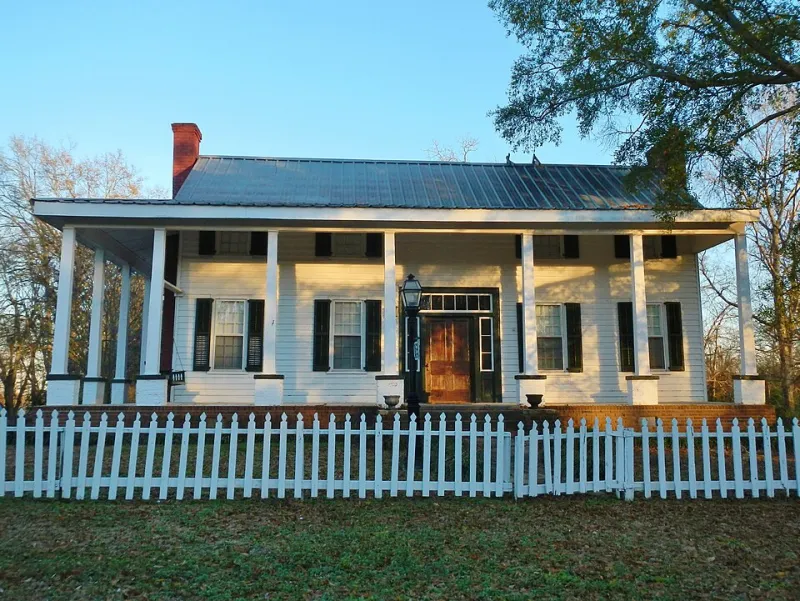
Photo: Rivers Langley; SaveRivers, CC BY-SA 3.0, via Wikimedia Commons
The Underground Railroad endures in American memory as a moral triumph—a clandestine network of safe houses, secret routes, and courageous souls who defied the machinery of slavery. Yet the dominant narrative has long centered white abolitionists as the primary architects of that freedom infrastructure, reducing Black participants to the role of grateful passengers rather than skilled engineers. This framing is not merely incomplete. It is a structural distortion that erases one of the most technically sophisticated acts of collective resistance in American history.
The men and women who built the hiding places, modified the floor joists, and concealed the crawl spaces of Underground Railroad stations were, in many documented cases, Black craftsmen—some enslaved, some nominally free—whose professional expertise made clandestine sanctuary not just possible, but durable. Recovering their contributions demands we look not only at historical records but at the buildings themselves, reading their hidden geometries as testimonies of Black intellectual labor.
The Architecture of Concealment
To understand what Black builders accomplished within the Underground Railroad network, one must first appreciate the technical demands of the work. A functional station could not simply be a sympathetic household. It required structural modifications that could withstand physical searches by slave catchers, some of whom were professionally trained to detect concealment. False walls had to be framed with the same lumber and at the same intervals as surrounding walls to avoid detection by sound. Trapdoors needed to be flush with flooring, their seams concealed beneath rugs or furniture positioned with deliberate precision. Hidden rooms required independent ventilation to prevent the accumulation of carbon dioxide during extended occupation, and their dimensions had to balance the need for capacity with the imperative of invisibility.
These were not amateur interventions. They were exercises in applied structural engineering, executed without formal credentialing in a society that criminalized Black literacy and technical autonomy. The craftsmen who performed this work drew on skills acquired through decades of coerced labor on plantation construction projects, in urban carpentry trades, and in the building of the very institutions—churches, courthouses, civic halls—that enforced their subjugation.
Free Black Builders and the Economies of Resistance
In Northern cities such as Philadelphia, Cincinnati, and Detroit—all critical nodes in the Railroad's geography—free Black communities maintained robust trades networks. Black carpenters and masons operated within these economies, often working alongside white craftsmen while navigating the persistent hostility of trade associations that sought to exclude them. It is within these professional communities that some of the most consequential architectural modifications to Railroad stations were likely designed and executed.
Philadelphia's Vigilance Committee, led by William Still—himself a foundational figure in Underground Railroad historiography—coordinated the movement of hundreds of freedom seekers through the city. Still's meticulous records, published in 1872 as The Underground Railroad, document the logistical infrastructure that supported this work. What those records only gesture toward is the physical labor that made safe passage possible: the modified basements, the reconfigured attic spaces, the church cellars whose access points were known only to a trusted few. The craftsmen who created those modifications left no formal architectural drawings. Their blueprints existed in memory and in wood.
In Ohio, the town of Oberlin—a nexus of abolitionist activity with a significant free Black population—produced Black tradesmen whose work on local structures has been examined by preservation historians seeking to document hidden chambers. Similar investigations have been conducted in the Quaker communities of southeastern Pennsylvania, where physical evidence of structural concealment has been recovered in buildings with documented connections to the Railroad network.
Enslaved Builders and the Double Life of Technical Skill
Perhaps the most overlooked dimension of this history involves enslaved craftsmen who applied their skills not only in service of enslavers but, covertly and at enormous personal risk, in service of liberation. Throughout the antebellum South, enslaved carpenters, bricklayers, and joiners were among the most economically valuable human property on the market. Their skills were hired out, their labor commodified across industries. What enslavers could not fully control was the knowledge those craftsmen carried—knowledge of building systems, of structural vulnerabilities, of the spaces within walls and beneath floors that could, under different circumstances, mean the difference between capture and escape.
Documented instances of enslaved builders constructing hiding places within Southern structures are rare in the historical record, precisely because such activities were capital offenses. Yet oral histories preserved within Black communities, and occasionally corroborated by physical evidence uncovered during building renovations, suggest that the practice was more widespread than formal archives acknowledge. The architecture of the antebellum South contained, within its very bones, acts of sabotage and solidarity that its builders dared not name aloud.
Reading Buildings as Historical Documents
In recent decades, preservation scholars and historians—including researchers affiliated with the National Trust for Historic Preservation and various state historic preservation offices—have begun applying forensic architectural analysis to structures with alleged Underground Railroad connections. This work is methodologically complex. The history of the Railroad was deliberately obscured by its participants, and many claims of station status have proven difficult to substantiate. But where physical evidence does survive—a concealed room whose framing dates to the antebellum period, a trapdoor whose hardware is consistent with mid-nineteenth-century manufacture—the question of who built these modifications deserves serious scholarly attention.
The answer, in community after community, points toward Black craftsmen. Not exclusively, and not in isolation from white allies who provided resources and legal cover. But the technical execution of concealment—the actual carpentry, the masonry, the joinery—was work performed by people who understood building systems at an intimate, hands-on level. In an era when Black men dominated the skilled trades in many regions of the country, that population of technically proficient workers was overwhelmingly African American.
Reclaiming the Builders
The tendency to center white abolitionists in Underground Railroad narratives reflects a broader pattern in American historical memory: the attribution of Black achievement to white agency, and the reduction of Black participation to passivity or mere endurance. This pattern is not accidental. It was cultivated through decades of historical writing that treated Black people as objects of history rather than its makers.
Recovering the Black architects of the Underground Railroad requires a different kind of historical imagination—one willing to read absence as evidence, to treat oral tradition as legitimate documentation, and to take seriously the proposition that the most sophisticated resistance infrastructure in antebellum America was designed, in significant part, by the people it was built to protect.
The hidden chambers are still there, in some cases. The false walls, the trapdoors, the ventilated recesses that once sheltered human beings moving toward freedom. They are monuments without plaques, built by craftsmen without official recognition. Restoring those names to history is not a sentimental gesture. It is an act of archival justice—and it begins with refusing to accept a blueprint that leaves Black hands out of the drawing.