Envoys Across the Mediterranean: The African Diplomats Who Walked the Halls of Renaissance Power
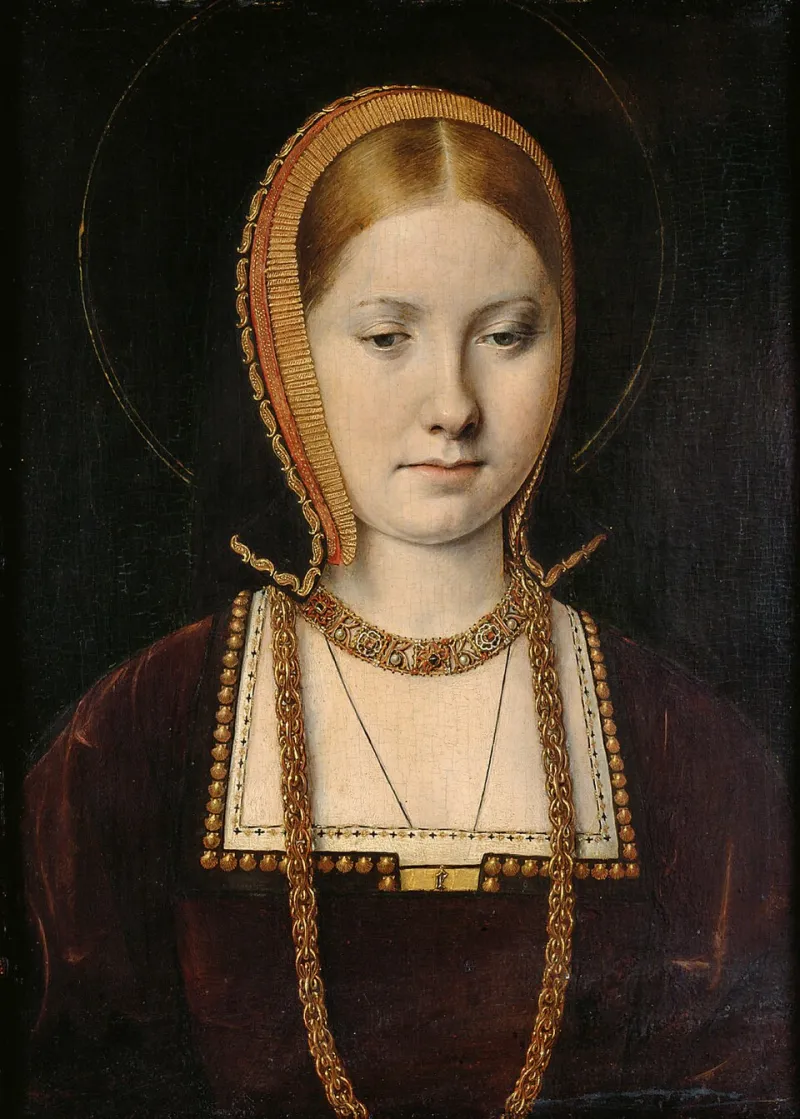
Photo: Michael Sittow, Public domain, via Wikimedia Commons
The standard American high school textbook presents Renaissance Europe as a self-contained intellectual universe — a civilization pulling itself upward by its own bootstraps, inspired by rediscovered Greek manuscripts and the singular genius of men like Leonardo and Erasmus. What those textbooks almost never mention is that during the same centuries, African ambassadors were moving through European courts with considerable authority, carrying letters of credence from powerful monarchs, negotiating commercial treaties, and in several documented cases, directly influencing the theological and philosophical debates that defined the age.
This is not conjecture. It is recoverable history, scattered across Portuguese royal archives, Vatican diplomatic correspondence, and Venetian state papers. The challenge has never been a lack of evidence. The challenge has been a historiographical tradition that preferred to see Africa as a recipient of European contact rather than an active participant in the making of the early modern world.
The Kingdom of Kongo and the Architecture of Atlantic Diplomacy
No African state engaged Renaissance Europe with more sustained sophistication than the Kingdom of Kongo. By the late fifteenth century, Kongolese rulers had developed what historians of diplomacy now recognize as a fully realized system of foreign relations — one that included resident ambassadors, formal protocols for receiving foreign envoys, and a clear doctrine distinguishing commercial agreements from political alliances.
When the Portuguese arrived on the Atlantic coast in 1483, they did not encounter a passive people awaiting instruction. They encountered a centralized state with its own logic of power. The Manikongo Nzinga a Ntinu received the Portuguese expedition with ceremonial deliberateness, and within years, Kongo had dispatched its own emissaries to Lisbon. These were not servants or curiosities. They were credentialed representatives authorized to negotiate on behalf of a sovereign.
The most consequential of these early envoys was Dom Pedro, a Kongolese nobleman who traveled to Portugal around 1488 alongside the explorer Diogo Cão's return voyage. His presence at the Portuguese court was not incidental. He carried specific diplomatic objectives: to establish the terms of a partnership, to assess European military technology, and to return with skilled craftsmen and clergy who could serve Kongolese state-building interests. Portugal, for its part, understood it was dealing with a peer negotiation. The resulting agreements shaped Atlantic trade routes for the next century.
Afonso I and the Epistolary Diplomat
Perhaps the most intellectually formidable African diplomat of the sixteenth century never left the continent — yet his influence on European courts was profound. Afonso I, who ruled Kongo from approximately 1509 to 1542, conducted an extensive written diplomacy with the Portuguese crown, the Vatican, and other European powers. His surviving letters, housed in Lisbon's Arquivo Histórico Ultramarino, reveal a ruler of exceptional rhetorical sophistication.
Afonso wrote in Portuguese with a command that astonished European recipients, but his arguments were rooted in Kongolese political philosophy. When he protested the illegal enslavement of his subjects by Portuguese traders — in letters addressed directly to King João III of Portugal — he was not appealing to European mercy. He was invoking treaty obligations, the mutual duties of Christian sovereigns, and the specific terms of agreements his predecessors had negotiated. These were the arguments of a trained diplomatist, not a suppliant.
European scholars at the time took notice. Several Portuguese humanists who encountered Afonso's correspondence cited him in their own writings on governance and the nature of legitimate authority. His letters circulated beyond Lisbon. The idea that African rulers could not engage European intellectual frameworks on equal terms was, in the sixteenth century, demonstrably false to anyone paying attention.
Leo Africanus and the Philosopher-Envoy
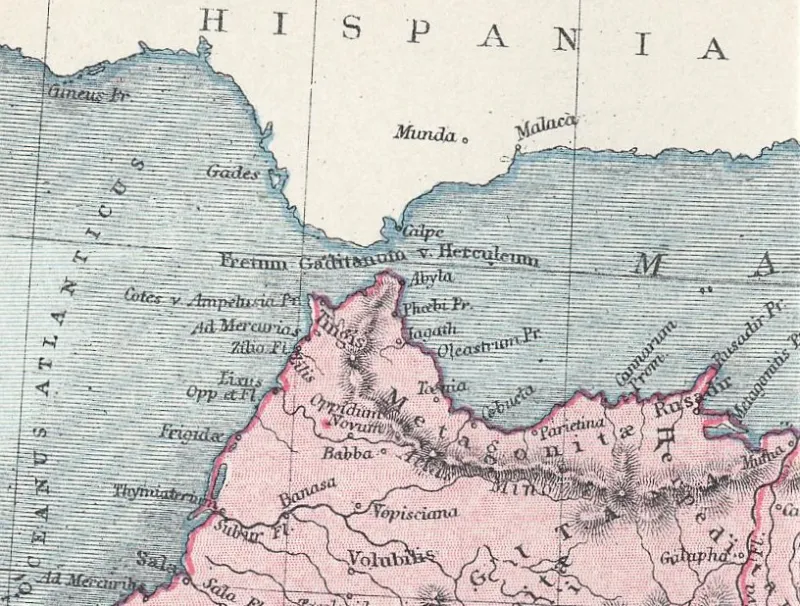
If Afonso I represents the diplomat as sovereign, Leo Africanus represents the diplomat as intellectual bridge. Born al-Hasan ibn Muhammad al-Wazzan in Granada around 1494 and raised in Fez, he traveled extensively across sub-Saharan Africa as an emissary of the Moroccan sultan before being captured by Spanish pirates and presented to Pope Leo X in 1518.
What followed was one of the strangest and most consequential intellectual encounters of the Renaissance. Converted to Christianity and renamed Johannes Leo de Medicis, he spent years in Rome composing his Description of Africa — a monumental geographic and ethnographic survey that became the primary European reference on African societies for the next two centuries. The irony is sharp: the most influential account of Africa in Renaissance Europe was written by an African.
But Leo was not simply a source. He was a participant in Roman intellectual life, engaging with humanist scholars, contributing to debates about geography and natural philosophy, and in the process transmitting North and West African scholarly traditions into European academic discourse. His descriptions of the libraries of Timbuktu, the philosophical schools of the Sahel, and the commercial networks of the Sudan forced European readers to reckon with a literate, urbanized Africa that their emerging racial ideologies were already struggling to accommodate.
The Ethiopian Presence in Rome
The community of Ethiopian pilgrims and scholars resident in Rome throughout the fifteenth and sixteenth centuries constitutes another chapter in this forgotten history. The church of Santo Stefano degli Abissini in the Vatican — still standing — served as the institutional home of Ethiopian clergy who maintained a continuous presence in Rome from at least the 1440s onward.
These were not isolated refugees. Ethiopian abbots participated in the Council of Florence in 1441, where their contributions to debates on church unity were formally recorded. Ethiopian scholars at Santo Stefano collaborated with European humanists on translations of Ge'ez manuscripts. The Ethiopians brought with them a theological tradition older than Rome's own Christianity, and European scholars knew it. The intellectual exchange was genuine, if asymmetrical.
Figures like Zara Yaqob, whose philosophical treatises were composed in Ethiopia during the mid-fifteenth century, were known in Roman ecclesiastical circles through the Ethiopian diaspora's networks. His arguments about the nature of reason, the universality of moral law, and the relationship between faith and intellect anticipated Enlightenment themes by two centuries — and arrived in Europe through exactly the kind of African diplomatic and scholarly presence that later historiography would erase.
Why the Erasure Matters Now
The suppression of this history was not accidental. As the Atlantic slave trade expanded through the sixteenth and seventeenth centuries, the economic logic of enslavement required an ideological infrastructure that positioned Africans as lacking the political, intellectual, and diplomatic capacities that would make their subjugation morally incoherent. Remembering the Kongolese ambassadors in Lisbon, the Ethiopian scholars in Rome, or Leo Africanus in the Vatican made that infrastructure harder to maintain.
For American audiences, the stakes of this recovery are immediate. The racial hierarchies that structured American society from its colonial foundations drew on exactly these European intellectual traditions — traditions that had already, in the sixteenth century, deliberately obscured Africa's diplomatic and intellectual presence. Restoring these figures to the historical record is not merely an act of academic correction. It is an act of political clarity.
The leopard-skin robes worn by Kongolese ambassadors at the Portuguese court were not exotic costume. They were the regalia of sovereign authority. The men who wore them knew it. The Europeans who received them knew it too. The question is whether we, centuries later, are willing to know it as well.