Merchants of the Indian Ocean: How Swahili Traders Built the World's First Globalized Economy
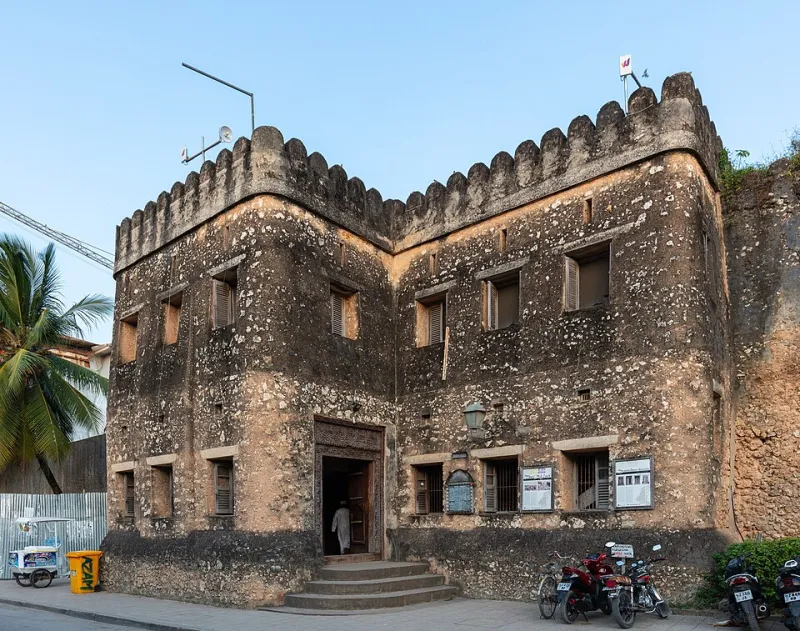
Photo: Diego Delso, CC BY-SA 4.0, via Wikimedia Commons
When most Americans encounter the history of global trade, the story typically begins with Vasco da Gama, the Portuguese navigator who famously rounded the southern tip of Africa in 1497. What that familiar narrative omits — often deliberately — is that when da Gama arrived on the East African coast, he encountered something that astonished his crew: thriving, cosmopolitan port cities staffed by sophisticated merchants who had been conducting international commerce for centuries. He had not discovered a new world. He had interrupted an existing one.
The Swahili Coast, stretching roughly 2,500 miles from present-day Somalia through Kenya, Tanzania, Mozambique, and the island of Zanzibar, was the commercial spine of the medieval Indian Ocean world. Understanding its history demands that we set aside the passive Africa of Western textbooks and engage with the archaeological record, the Arabic chronicles, the Chinese imperial records, and the rich oral traditions that together paint a far more accurate portrait.
The Architecture of Ambition: What the Cities Tell Us
Archaeological excavations at sites including Kilwa Kisiwani, Mombasa, Malindi, and Zanzibar's Stone Town have uncovered material evidence of extraordinary urban sophistication. Kilwa, situated off the southern coast of present-day Tanzania, was described by the Moroccan scholar Ibn Battuta in 1331 as one of the most beautiful cities in the world. He was not speaking hyperbolically. Structural remains reveal multi-story coral stone buildings, elaborate cistern systems, and a grand mosque — the Husuni Kubwa palace complex — whose architectural scale rivals contemporaneous structures anywhere on the planet.
Crucially, the artifacts recovered at these sites are not merely African. Chinese porcelain from the Song and Ming dynasties, Persian glazed ceramics, Indian glass beads, and Arabian silver coins have all been unearthed in significant quantities. This is not the detritus of foreign conquerors. This is the inventory of active trade partners — evidence that Swahili merchants were not passive recipients of outside commerce but central brokers who set terms, managed logistics, and accumulated capital on their own behalf.
The Commodities That Connected Continents
To appreciate the scale of Swahili commercial power, one must understand what was being traded and who controlled the supply chains. Gold from the interior kingdoms of Great Zimbabwe and later the Mutapa Empire moved through Swahili middlemen to ports where it entered global circuits. Ivory, highly prized across Asia for everything from piano keys to ceremonial objects, was harvested, processed, and exported by African networks long before European demand entered the equation. Enslaved people, tragically, were also a commodity — a dimension of this history that must be named honestly rather than euphemized, as the Indian Ocean slave trade predated and in many respects paralleled the transatlantic system.
In exchange, the Swahili Coast imported textiles from India, manufactured goods from Persia, and luxury items from China. These were not merely prestige objects for local elites. They were currencies of political authority, redistributed through interior African kingdoms in ways that sustained complex patron-client relationships across vast distances. The Swahili merchant class understood leverage. They understood market timing. They understood, in a word, commerce.
Language as Evidence: The Swahili Tongue
Perhaps no single artifact better demonstrates the cosmopolitan character of the East African coast than the Swahili language itself. A Bantu language at its grammatical and lexical core, Swahili incorporates significant borrowings from Arabic, Persian, Portuguese, Hindi, and eventually English — each layer corresponding to a distinct phase of commercial contact. Linguists have used these borrowings to reconstruct the chronology of trade relationships with remarkable precision.
The word biashara, meaning commerce or trade in Swahili, derives from the Arabic bisharah, signaling the depth of Arab-African commercial entanglement. Yet the language's Bantu foundation — its grammar, its verb structures, its fundamental worldview — makes clear that this was not an Arab civilization with African participation. It was an African civilization that had absorbed and domesticated foreign influences on its own terms. That distinction is not semantic. It is historical.
The Portuguese Disruption and Its Long Shadow
When Portuguese fleets began systematically attacking Swahili port cities in the early sixteenth century, they were not opening trade routes. They were seizing them. Kilwa was sacked in 1505. Mombasa was bombarded repeatedly. The Portuguese Crown sought to impose a cartaz system — a protection-racket licensing scheme — that would divert Indian Ocean profits to Lisbon. This colonial intervention did not simply redirect commerce; it fractured the institutional knowledge, the merchant dynasties, and the credit networks that had made the Swahili Coast a global economic hub.
The consequences of that disruption echo into the present. When contemporary economists describe sub-Saharan Africa as economically marginal, they are describing a condition produced by centuries of deliberate extraction and institutional destruction — not an inherent characteristic of the continent or its peoples. The pre-Portuguese Swahili Coast is proof of concept: given institutional stability and access to trade networks, African economies generated wealth at a scale that commanded global attention.
Oral Traditions and the Historians Who Listen
Academic historians have only recently begun to treat East African oral traditions as legitimate primary sources rather than colorful folklore. Scholars such as Derek Nurse, Thomas Spear, and Mark Horton have demonstrated that Swahili oral histories — transmitted through families, guilds, and religious institutions — preserve detailed and often verifiable accounts of commercial relationships, political alliances, and genealogical claims that complement the written record.
For American readers whose own relationship to oral tradition has been shaped by the experience of enslavement — which systematically destroyed written records while preserving memory in song, story, and ritual — the methodological implications are significant. The tools we use to recover suppressed histories are themselves a form of intellectual sovereignty. The Ota Benga Archive exists, in part, because we believe that sovereignty is worth defending.
What This History Demands of Us
Reclaiming the Swahili Coast's commercial legacy is not an exercise in nostalgia. It is a corrective intervention in a distorted global narrative. When students in American classrooms learn that Africa lacked complex economic institutions prior to European contact, they are being taught a lie — one with ongoing political consequences, because the lie underwrites contemporary assumptions about African incapacity that shape foreign policy, development economics, and racial ideology alike.
The merchants of Kilwa and Zanzibar built durable institutions, accumulated multigenerational wealth, and participated as equals — often as superiors — in the most dynamic commercial system the premodern world had yet produced. Their story belongs in every curriculum that claims to teach global history. Ensuring it gets there is work that falls to all of us.