Wrenches in the Works: How Enslaved Technicians Turned Their Masters' Machines Against the System of Bondage
The ledgers of Southern plantations are full of losses that their keepers attributed to bad luck, poor materials, or the supposed incompetence of enslaved workers. Millstones cracked without apparent cause. Gear trains in cotton gins developed stress fractures weeks after inspection. Blacksmith-forged tools bent under loads they were designed to bear. Boilers on riverboats—many of them maintained by enslaved mechanics—failed with suspicious regularity. For generations, historians of American industry read these records as evidence of technological backwardness or managerial failure. What they documented, in many cases, was something far more deliberate: a sustained, covert campaign of technical sabotage waged by people who understood the machinery of their oppression with extraordinary precision.
This is not a marginal footnote in the history of American labor. It is, in many respects, the story that American labor history was constructed to avoid.
The Technical World Slavery Required
To understand how enslaved workers sabotaged industrial systems, it is necessary first to understand how deeply those systems depended on their expertise. The antebellum Southern economy was not, as popular mythology sometimes suggests, a purely agrarian world of unskilled field labor. It was an economy threaded through with complex mechanical infrastructure: rice mills, sugar processing facilities, cotton gins, iron foundries, river transport networks, and large-scale construction operations. Every one of these industries required workers with sophisticated technical knowledge—and in the South, that knowledge was overwhelmingly held by enslaved people.
Slaveholders recognized this dependency even as they worked to obscure it. Plantation correspondence from Virginia, South Carolina, and Louisiana routinely describes the difficulty of replacing skilled enslaved workers—blacksmiths, millwrights, boatmen, carpenters—because their knowledge was not easily transferable and not cheaply replaceable. The economic logic of slavery created a paradox: the system required the cultivation of expertise in the very population it sought to render powerless. That expertise, once cultivated, could not be fully controlled.
Deliberate Damage and the Problem of Proof
Documenting intentional sabotage is, by its nature, an exercise in reading against the grain of surviving records. Enslaved workers who damaged machinery rarely announced their intentions, and slaveholders who suspected sabotage faced their own incentives to misattribute losses. Publicly acknowledging that an enslaved worker had successfully disrupted plantation operations was an admission of vulnerability—both physical and ideological. It contradicted the foundational claims of the proslavery argument, which insisted that enslaved people were content, loyal, and incapable of sustained strategic thought.
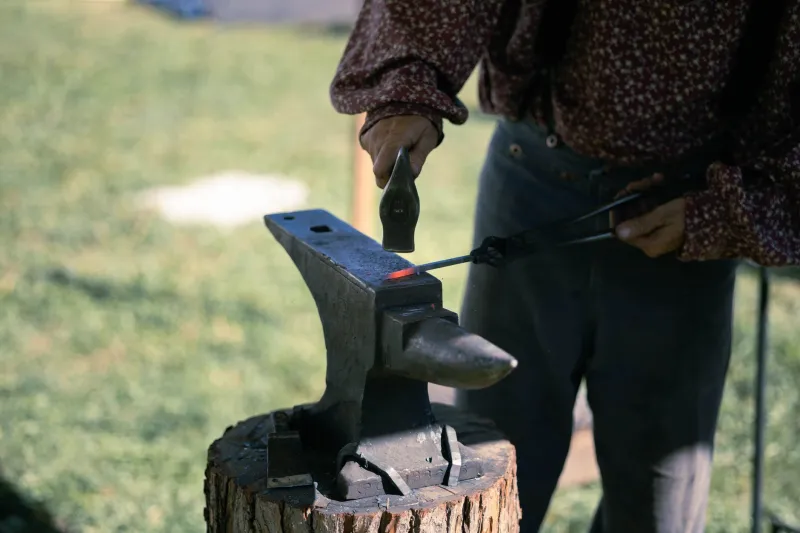
Nevertheless, the evidence accumulates. Insurance records from Southern states show disproportionate claims for mechanical failure on operations staffed by skilled enslaved workers. WPA narratives collected in the 1930s contain numerous accounts—often delivered with careful indirection—of workers who knew precisely how to stress a component to its breaking point, or how to introduce contamination into a lubricant that would cause a mechanism to seize days later, long after any individual act could be traced. One formerly enslaved blacksmith interviewed in Alabama described the craft of forging iron that looked correct but was internally compromised: tools that would survive initial inspection but fail under sustained use.
Historian Walter Johnson, examining the records of the Mississippi River steamboat economy, has noted the frequency with which boiler explosions and mechanical failures occurred on vessels with large enslaved crews—failures that, when examined alongside the technical knowledge those workers demonstrably possessed, resist easy explanation as accident. The men who maintained those engines understood them intimately. They also had every reason to want them to stop.
Sabotage as Strategy, Not Spontaneity
What distinguishes the most significant acts of technical resistance from ordinary work slowdowns is their sophistication. Slowing one's pace, feigning illness, or producing substandard work through minimal effort were common and well-documented forms of everyday resistance. But deliberate mechanical sabotage required something more: a precise understanding of how a system worked, where its vulnerabilities lay, and how to exploit those vulnerabilities in ways that would not immediately implicate the saboteur.
This was not impulsive rage. It was engineering.
The enslaved millwright who introduced a subtle misalignment into a gear assembly understood the mechanics of torque and friction well enough to predict how that misalignment would propagate over time. The blacksmith who adjusted the carbon content of an iron casting knew materials science well enough to produce a component that would pass visual inspection while carrying a structural flaw timed to emerge under specific conditions. These acts required not only technical knowledge but patience, planning, and the sustained capacity to perform loyalty while executing resistance—a cognitive and emotional demand that the dominant historical narrative has consistently refused to credit enslaved people with meeting.
The Historiographical Silence
The marginalization of this history is not accidental. American labor history, as a discipline, developed largely within frameworks that centered white industrial workers and their struggles with capital. The specific experiences of enslaved workers—whose relationship to labor, capital, and coercion operated under fundamentally different conditions—were treated as a separate subject, assigned to the subdiscipline of slavery studies and kept largely insulated from conversations about industrial history, labor organizing, and the politics of production.
The consequence is a distorted picture of how American industrialization actually functioned. The plantation economy was not a pre-industrial relic eventually superseded by Northern manufacturing; it was an integrated component of a single national and international economic system, and the resistance embedded within it shaped that system's development in ways that remain underexamined. When enslaved workers disrupted production, they affected commodity flows, insurance markets, investment decisions, and the technological choices slaveholders made about mechanization. Their resistance was an economic force, and its exclusion from economic history is a scholarly failure with ideological roots.
Reclaiming the Resisters
Naming this history requires confronting a persistent discomfort in American public memory: the preference for narratives of enslaved suffering over narratives of enslaved agency. Suffering, however genuine and however important to document, positions enslaved people as objects of history rather than its subjects. Agency—including the dangerous, calculated, technically sophisticated agency of the saboteur—insists on subjecthood.
The men and women who bent iron the wrong way, who fed grit into gearboxes, who guided riverboats into sandbars with plausible deniability, were not simply enduring their condition. They were analyzing it, identifying its mechanical dependencies, and acting on that analysis with the tools available to them. That is a form of intellectual and political practice that deserves to be recognized as such—not as a curiosity, but as a central chapter in the history of American labor, resistance, and the long war over who controls the means of production.
The Ota Benga Archive holds this history not as an addendum to the American story, but as one of its load-bearing structures. Understanding how enslaved technicians fought back—quietly, precisely, and at extraordinary personal risk—is not a supplement to understanding American industrialization. It is, in many respects, the key to understanding it honestly.