When the Algorithm Doesn't Know Your Grandmother's Name: DNA Testing and the Erasure of Black Oral Genealogy

A Promise Built on Someone Else's Framework
The advertisements are seductive in their simplicity: submit a saliva sample, wait a few weeks, and receive a map of your ancestral origins rendered in clean percentages and pastel-colored continents. For African Americans whose family trees were deliberately severed by the machinery of chattel slavery, the appeal is profound and entirely understandable. The hunger to know where one comes from is not a consumer preference—it is a survival instinct encoded by generations of enforced anonymity.
But there is a question that the commercials never ask, and that the glossy pie charts cannot answer: what happens to the knowledge that already exists?
Long before 23andMe or AncestryDNA entered the market, African American families possessed genealogical archives of extraordinary depth and sophistication. These archives were not stored on servers or printed in bound volumes. They were held in the voices of grandmothers, in the careful repetition of names across kitchen tables, in the stories told at funerals about people who had died before anyone living was born. They were oral technologies—deliberate, structured, and no less rigorous for being unwritten.
The commercial DNA industry, by design and by default, treats these traditions as supplementary at best and irrelevant at worst.
The Archive That Survived the Auction Block
To understand what is at stake, it is necessary to appreciate what enslaved people actually accomplished in the domain of genealogical knowledge. Under a legal regime that refused to recognize Black kinship—that could dissolve marriages, separate parents from children, and scatter siblings across state lines without legal recourse—African Americans developed memory practices of remarkable precision.
Historians including Heather Andrea Williams and Dylan Penningroth have documented the extraordinary lengths to which enslaved and recently freed Black people went to reconstruct and maintain family records. Oral genealogies were not casual reminiscences. They were structured recitations, passed with intention, often encoding specific details about geographic origins, occupational histories, and kinship obligations that written records would never have captured even if they had been permitted to exist.
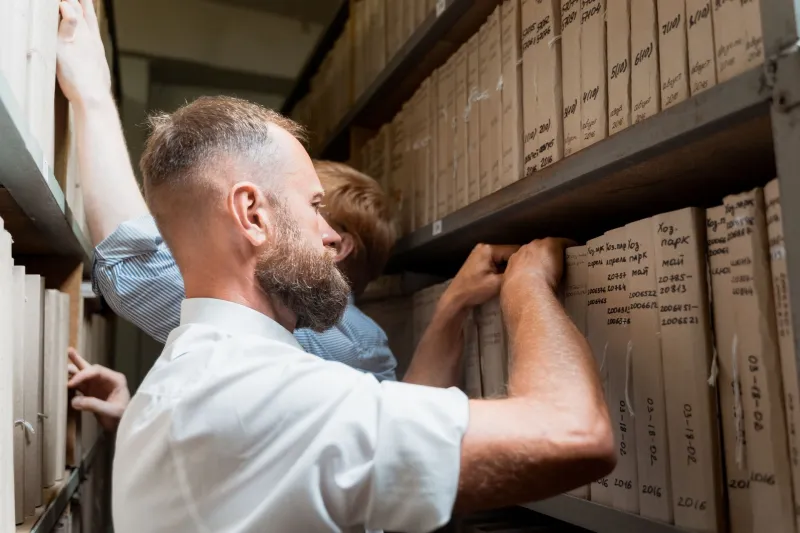
The Freedmen's Bureau records that survive from the Reconstruction era offer a partial window into this practice. In the letters that formerly enslaved people dictated or wrote to locate missing family members, the specificity of remembered detail is striking—names, approximate ages, distinguishing physical features, the names of enslavers, the names of neighboring plantations. These were not guesses. They were the output of an oral archive that had been maintained under conditions of extreme duress.
When a DNA testing company returns a result that says an African American customer is "67% Nigerian, 18% Ghanaian, 9% Cameroonian," it is offering a genomic probability derived from reference populations that are themselves incomplete, commercially curated, and subject to revision. It is not engaging with the oral record that may already name a specific community, a specific region, or a specific lineage. The algorithm does not ask what your family already knows.
The Epistemological Violence of the Percentage
The reduction of ancestry to percentages carries philosophical weight that its marketing language obscures. Percentages imply precision. They imply that the question of origin has a correct numerical answer, and that the testing company possesses the methodology to produce it. This framing does significant cultural work: it positions genomic science as the authoritative source of genealogical truth and implicitly demotes all other knowledge systems to the status of folklore.
This is not a neutral act. It is a continuation, in commercial form, of a long Western tradition of dismissing non-documentary African knowledge systems as unreliable, sentimental, or primitive. The griot tradition—explored in depth elsewhere in this archive—represents one of the most sophisticated information storage and retrieval systems in human history. Oral genealogical practices across West and Central Africa could track lineages across dozens of generations with a degree of relational complexity that written European records rarely matched. The descendants of people taken from those traditions did not abandon them. They adapted them to new and brutal circumstances.
When a DNA result contradicts what a family's oral tradition holds to be true—or when a customer is encouraged to trust the algorithm over the testimony of elders—the testing company is, functionally, performing an act of epistemological displacement. It is substituting one knowledge system for another and calling the substitution a discovery.
Reference Populations and the Politics of Genetic Mapping
The technical limitations of commercial DNA ancestry testing compound the philosophical ones. The accuracy of any ancestry estimate depends entirely on the quality and representativeness of the reference populations against which a customer's genome is compared. For African and African American genealogy, these reference populations are notoriously incomplete.
African genetic diversity is the greatest of any continent on Earth—a fact that reflects the continent's status as the origin point of all modern human populations. The genomic variation present across the more than fifty nations of Africa is staggering, and yet most commercial testing companies maintain reference populations that dramatically underrepresent this diversity. Large portions of Central Africa, the Congo Basin, and the interior of West Africa are poorly represented or absent from the datasets that generate those reassuring percentage breakdowns.
What this means in practice is that the results returned to African American customers are often broad, imprecise, and subject to significant revision as companies periodically update their reference panels—sometimes dramatically changing a customer's results without any change in the underlying genetic data. A person who was told they were "primarily Senegambian" in one update may find themselves reclassified in the next. The archive, in other words, is unstable. The oral tradition, by contrast, has held for generations.
Toward a Genealogical Justice Framework
None of this is to suggest that genomic science has nothing to offer African American genealogical research. At its best, DNA testing has facilitated genuine reconnections, confirmed long-held family narratives, and opened investigative pathways that documentary records alone could not provide. The technology is not inherently hostile.
The problem is the epistemological hierarchy that the industry has built around it—the implicit claim that genetic data supersedes all other forms of genealogical knowledge, and the corresponding failure to build platforms that integrate oral testimony, community memory, and non-documentary evidence as legitimate inputs rather than colorful anecdotes.
A genealogical justice framework would look different. It would treat oral traditions as primary sources rather than background noise. It would invest in expanding African reference populations with the same commercial urgency applied to marketing. It would acknowledge, in the language of its disclaimers and its user interfaces, the structural limitations of what a percentage can actually tell a Black American family about who they are and where they come from.
Most importantly, it would recognize that the families who survived the Middle Passage, who kept names alive under the lash, who whispered genealogies across generations of legal invisibility, were not waiting to be told their history by an algorithm. They were already keeping it. The question is whether the technology will learn to listen.